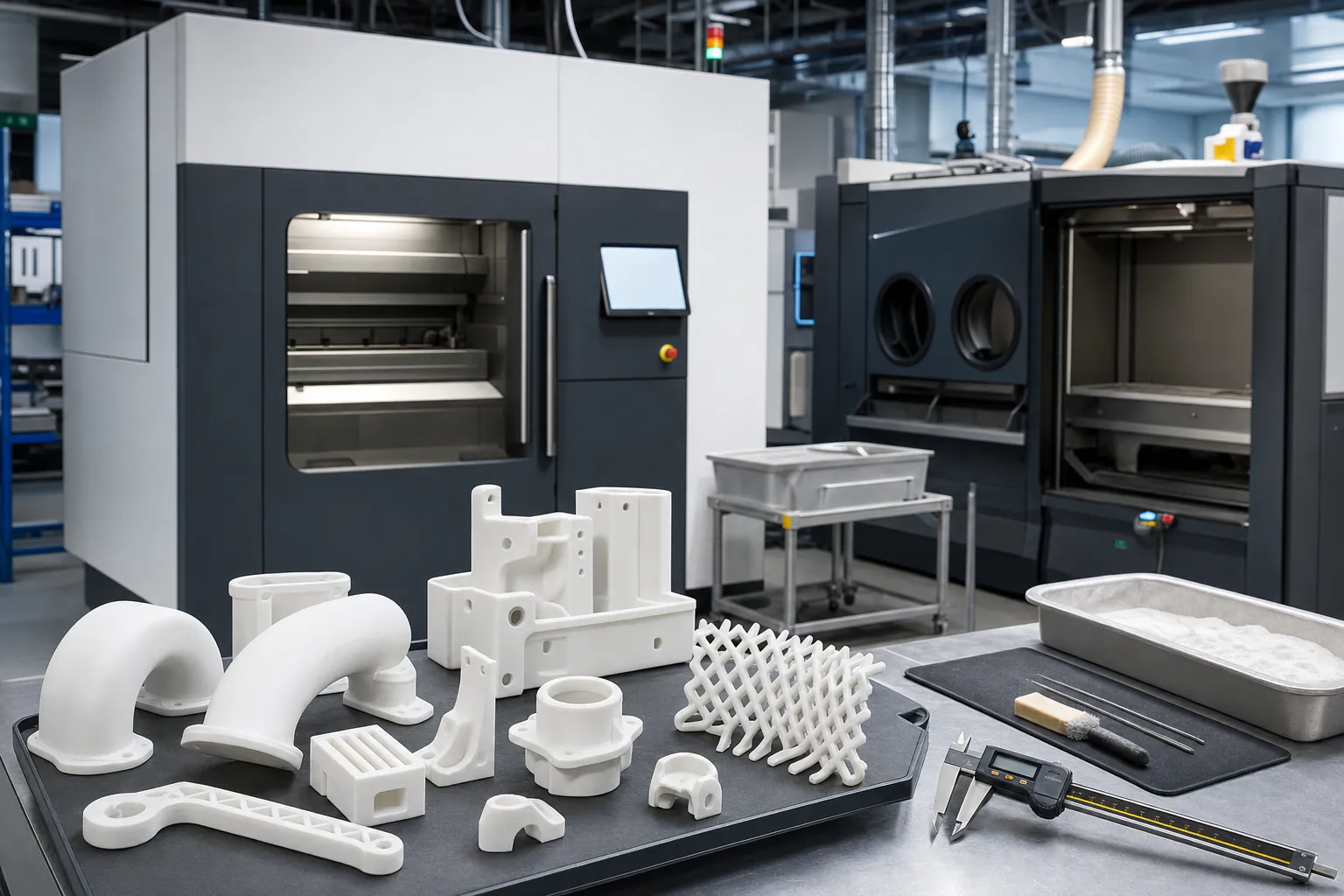
Industrial 3D printing is useful when speed, geometry, low quantity, or tooling avoidance matters more than conventional high-volume economics. The buyer still needs to decide whether the printed part is a temporary aid, a functional prototype, a replacement component, or ongoing production hardware because that decision controls material, orientation, inspection, and risk acceptance.
1. Is the part temporary tooling, a prototype, a replacement, or end-use hardware?
2. What load, heat, chemical, wear, and safety conditions apply?
3. Which interfaces require machining or metal inserts?
4. Would CNC machining, molding, or sheet metal be more economical at repeat volume?