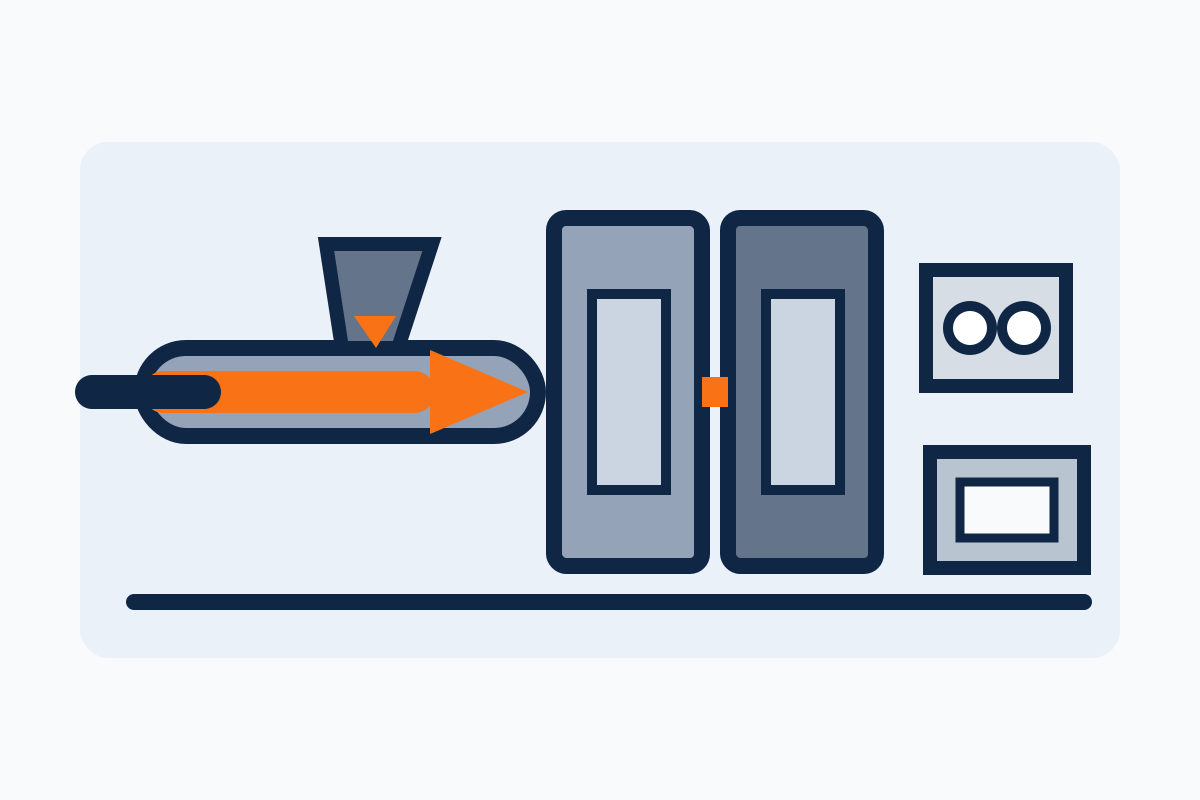
Energy-equipment die casting is a tooling decision as much as a part decision. Buyers should confirm that annual volume, design maturity, thermal path, sealing interfaces, machining allowance, finish, and validation justify high-pressure die casting instead of CNC machining, sheet metal, extrusion, or another process. A casting is not automatically pressure-tight; the required verification must be stated.
1. Why is die casting preferred over machining, sheet metal, or extrusion?
2. Which areas transfer heat, seal, carry load, or locate connectors?
3. What porosity or leak requirement is actually specified?
4. Is the design and annual volume stable enough to release tooling?