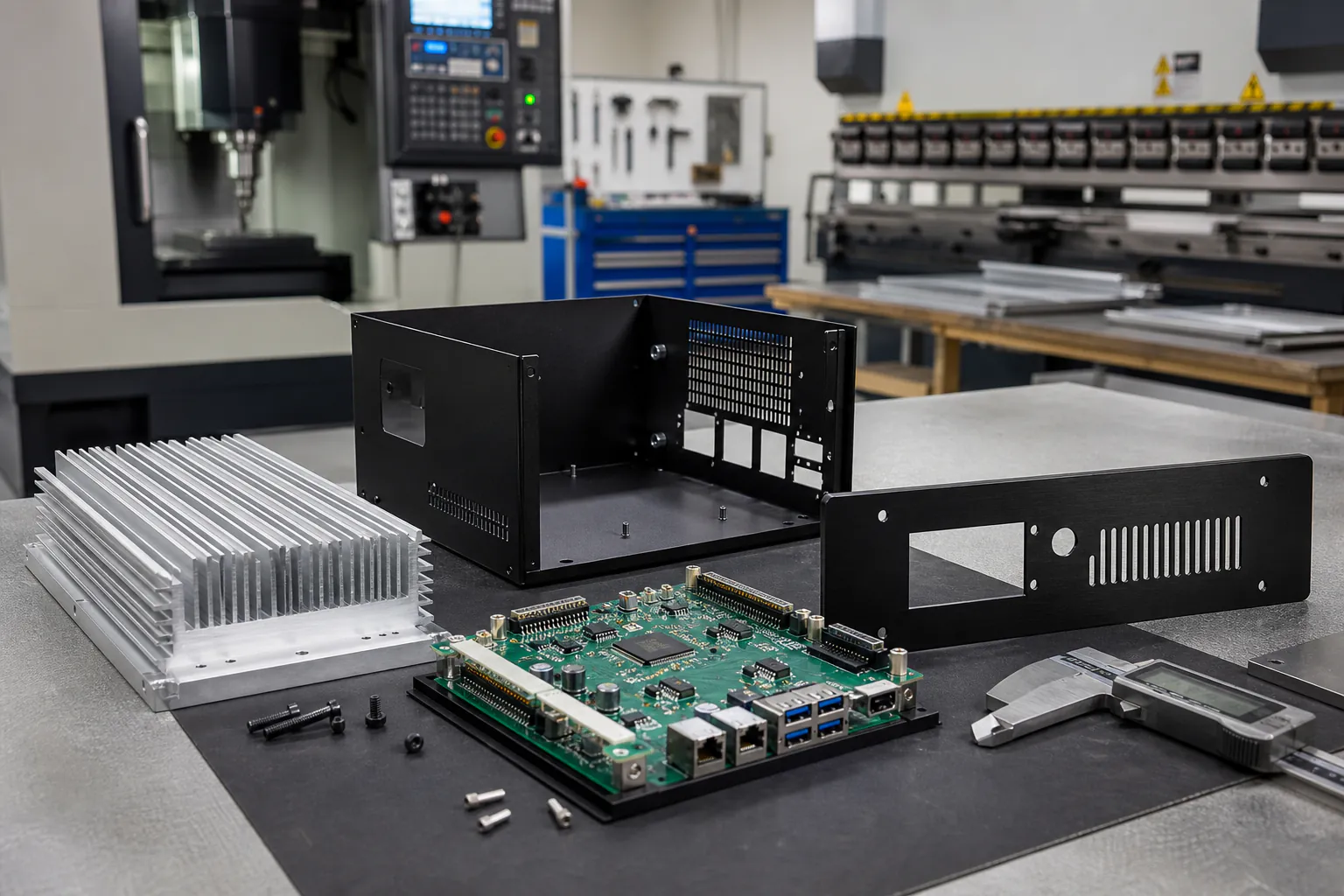
19-inch rack-mount chassis
A chassis holds boards, fans, power supplies, drives, and rear connectors while sliding into rails. Local hole accuracy does not guarantee card, rail, and rack alignment.
Use rack ears and rail interfaces as primary datums, then validate front/rear panels, board supports, airflow, and removal clearance with representative hardware.
High-density server cabinet
The frame carries equipment, cable bundles, doors, and airflow panels while shipping as a large assembly. Welding and coating can change squareness and door gaps.
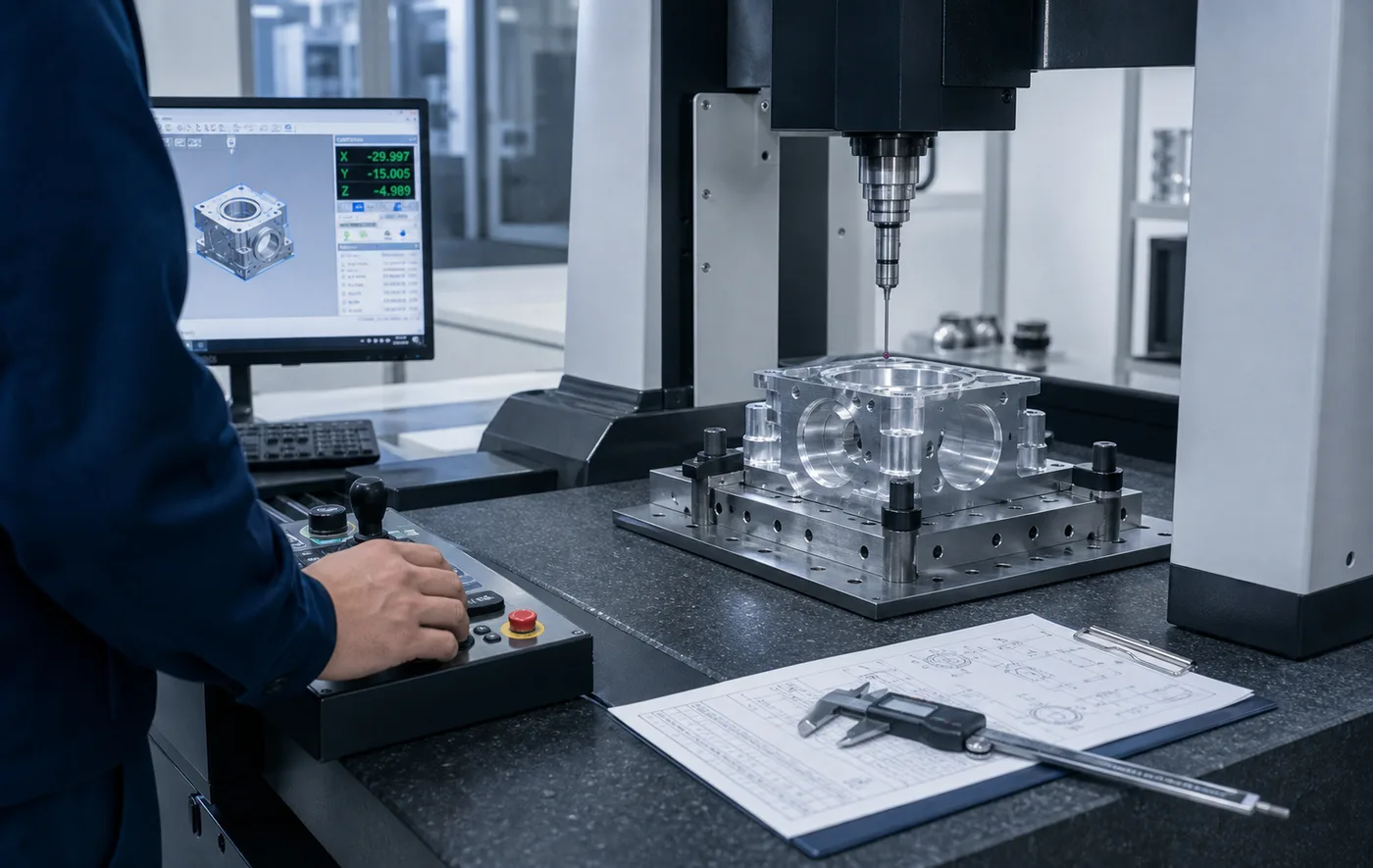
Fixture the frame from equipment datums, inspect after welding and finish, load-test only to the buyer's method, and engineer pallet or crate restraint around the final center of gravity.
Liquid-cooling distribution frame
A support frame locates manifolds, hoses, drip-control features, sensors, and service panels near electronics. Mechanical fit and fluid-service access must be reviewed together.
Confirm line routing, bend radius, drip management, removable panels, grounding, and maintenance clearance before freezing hole patterns and braces.
Cable and power management kit
Rails, trays, brackets, and covers may ship as a labeled kit for field installation. Similar-looking parts and mirrored orientations create installation errors.
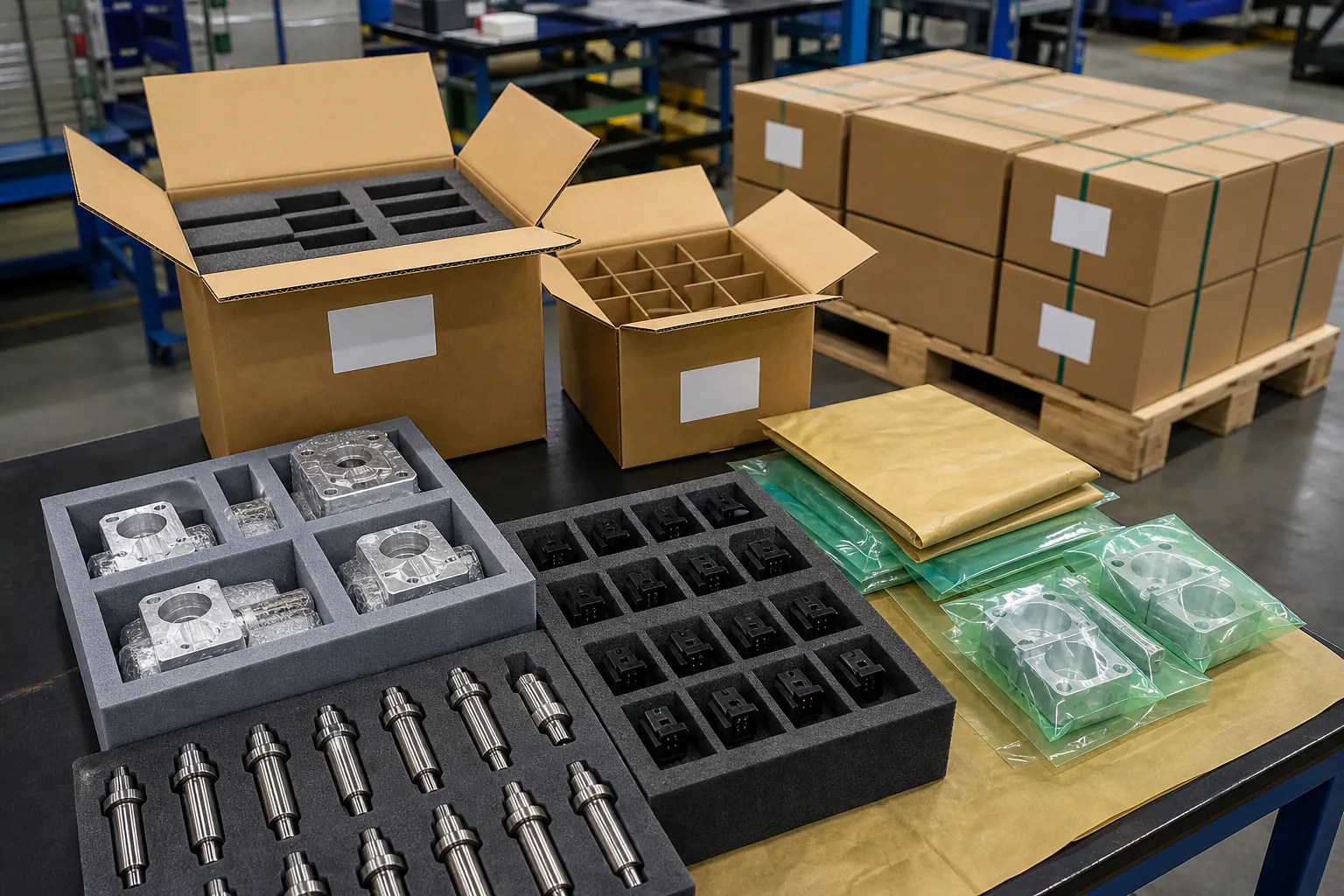
Control part identification, handed geometry, hardware bags, assembly drawings, and pack sequence as part of the manufacturing specification.
AI accelerator rack with rear-door cooling
A high-density compute rack may combine heavy accelerator trays, rear-door heat-exchanger hinges, coolant hose corridors, quick-disconnect supports, busway clearances, fan-service zones, and strict front-to-rear airflow control. The populated center of gravity and door loads can differ greatly from an empty cabinet, while small frame movement can affect rail insertion or coolant-door alignment.
Model the populated mechanical stack and service motions, then control rail datum, hinge axis, door sag, hose bend space, airflow seals, lifting points, and shipment restraints. Validate the first rack with representative tray mass and cooling-door hardware rather than using an unloaded frame inspection as the final acceptance.
Edge data center equipment cabinet
An edge deployment may place compute, networking, power, batteries, fans, filters, and remote-monitoring hardware in a compact cabinet near dust, humidity, vibration, or public access. The enclosure needs front or side service without the roomy aisles available in a large facility, and field-replaceable modules must clear doors, cables, and structural members.
Define the installation environment, access side, module replacement path, filtration and drainage strategy, security hardware, grounding, and transport orientation before detailing panels. Build a service mockup with representative equipment and cabling so the fabrication release is based on real maintenance clearance and not only the nominal CAD envelope.