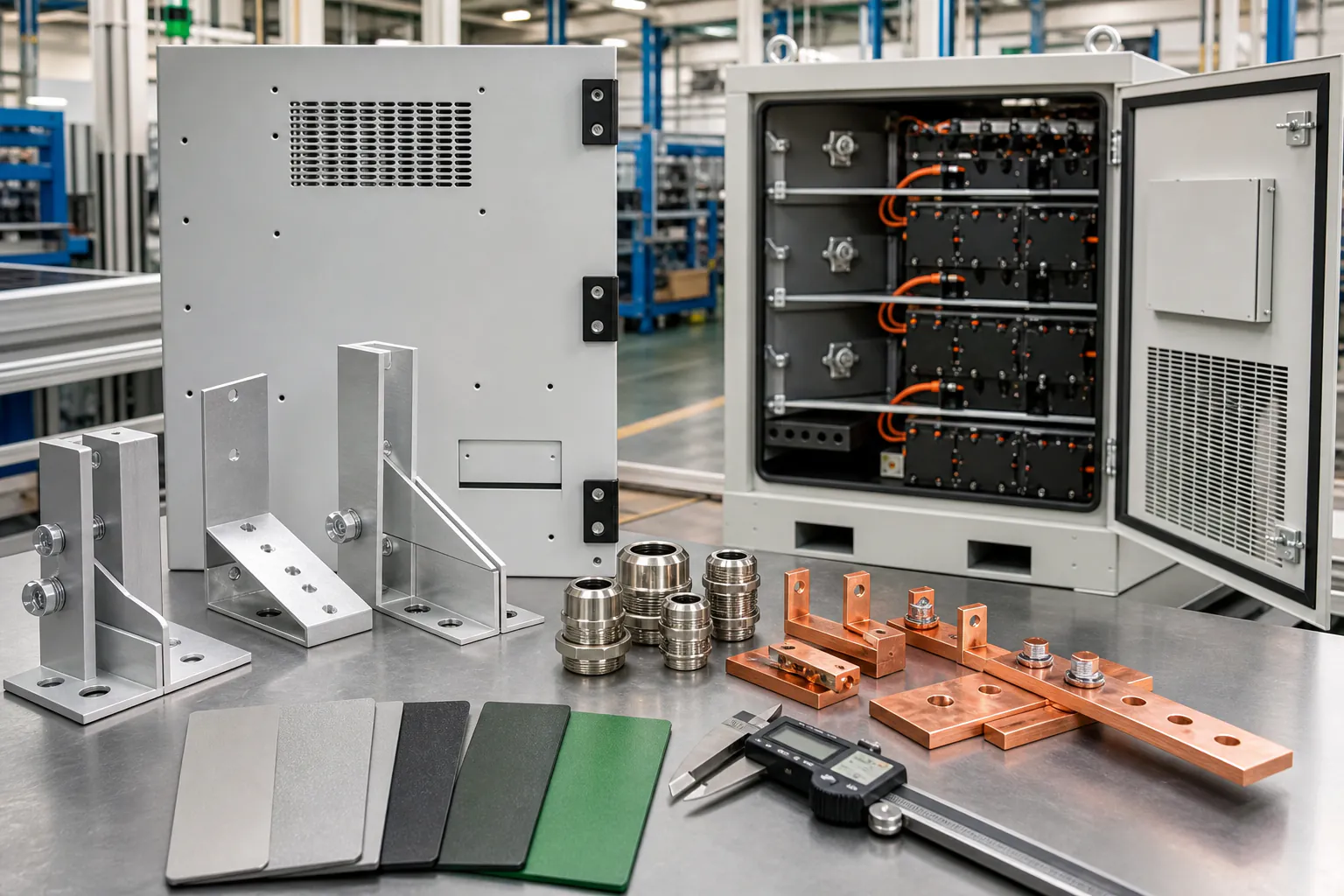
Outdoor BESS cabinet
A tall cabinet integrates battery racks, control equipment, doors, vents, drains, cable entries, seals, and lifting features. A fabrication drawing alone may omit installed loads and environmental test conditions.
Quote the complete mechanical BOM and assembly condition, then validate fit and the buyer-defined environmental tests on a fully representative cabinet.
Battery module tray
A tray supports cells or modules, fasteners, cooling interfaces, and electrical clearances while stacking into a larger rack. Bend and weld variation can create cumulative misalignment.
Reference module locators and rack mounting from common datums, control flatness and fastener access, and validate a stacked assembly before volume release.
Inverter enclosure
The housing must align power modules, busbars, connectors, heat sinks, fans, and access covers. Coating on thermal or grounding faces can undermine assembly function.
Map thermal, conductive, masked, sealing, and cosmetic zones, then inspect critical interfaces after the complete finish and hardware sequence.
Containerized system subassembly
Internal frames, partitions, ducts, cable trays, and equipment panels may be delivered in kits to a system integrator. Installation order and identification become production requirements.
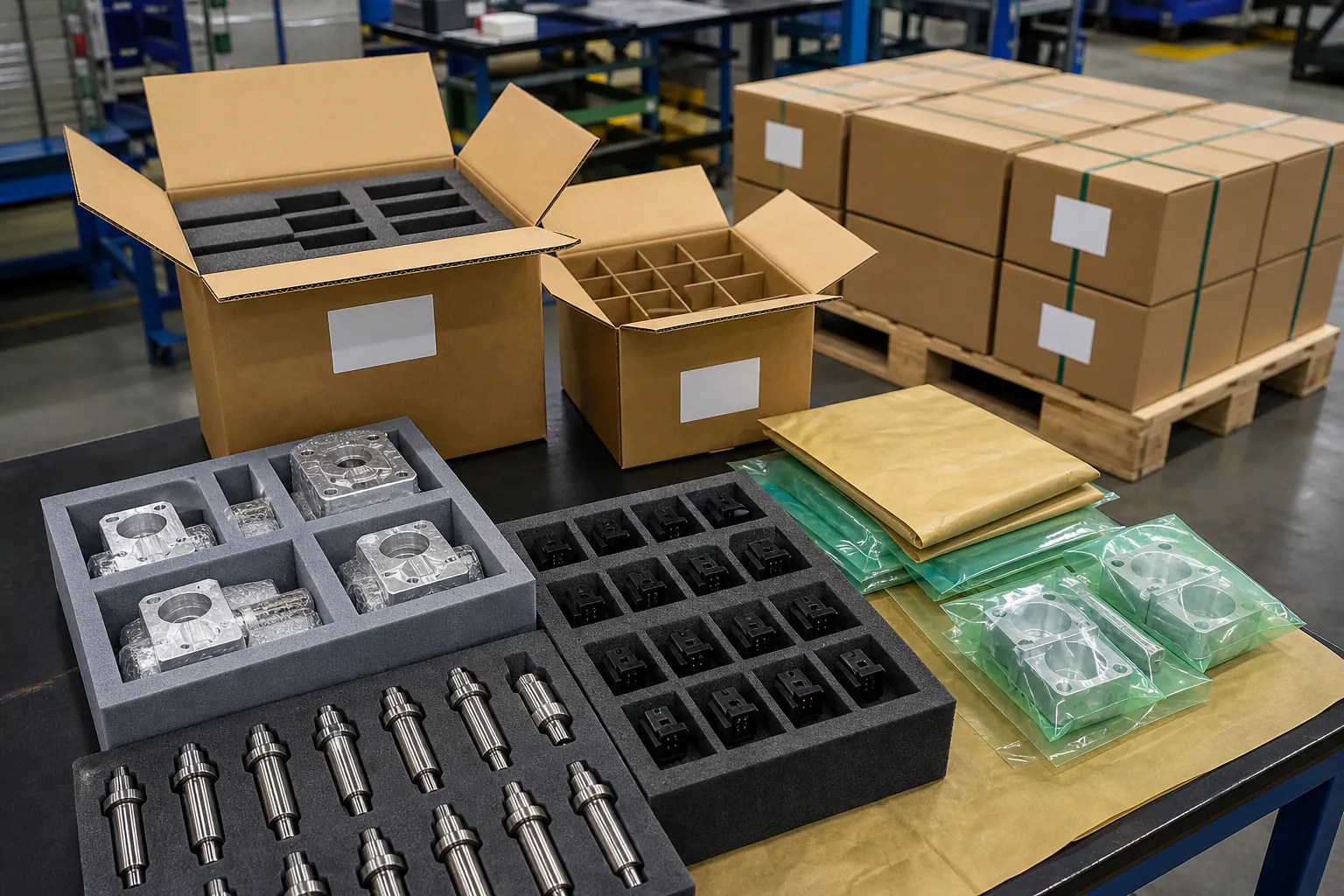
Control kit BOM, labels, handed parts, fastener packs, assembly drawings, and shipment sequence alongside the dimensional specification.
Telecom backup battery cabinet
A remote-site cabinet may combine batteries, rectifiers, controllers, cable terminations, ventilation or cooling, weather seals, theft resistance, and maintenance access in a narrow outdoor footprint. Battery replacement routes, terminal protection, acid or electrolyte contingency, and site anchoring create requirements that a generic electrical cabinet drawing may not capture.
Document the battery technology, module weight, terminal orientation, service lift path, separation barriers, vent or thermal strategy, anchoring, cable entry, and environmental test plan. Validate replacement access and energized-part protection with representative modules before approving the cabinet for a repeat remote-site program.
Indoor UPS and battery-rack enclosure
An indoor backup-power assembly may appear simpler than an outdoor BESS cabinet, yet it still carries concentrated module loads, busbar clearances, removable trays, front-service equipment, seismic or site anchoring considerations, and strict room-layout constraints. Paint, fasteners, and rail positions influence grounding and field installation even when rain sealing is not required.
Separate building interface, rack loading, electrical clearances, service aisle, tray extraction, grounding, and installation labels from outdoor sealing assumptions. Assemble a representative vertical stack, verify rail accumulation and module removal, then release the repeated frame and panel dimensions with a controlled installation kit.