Typical parts
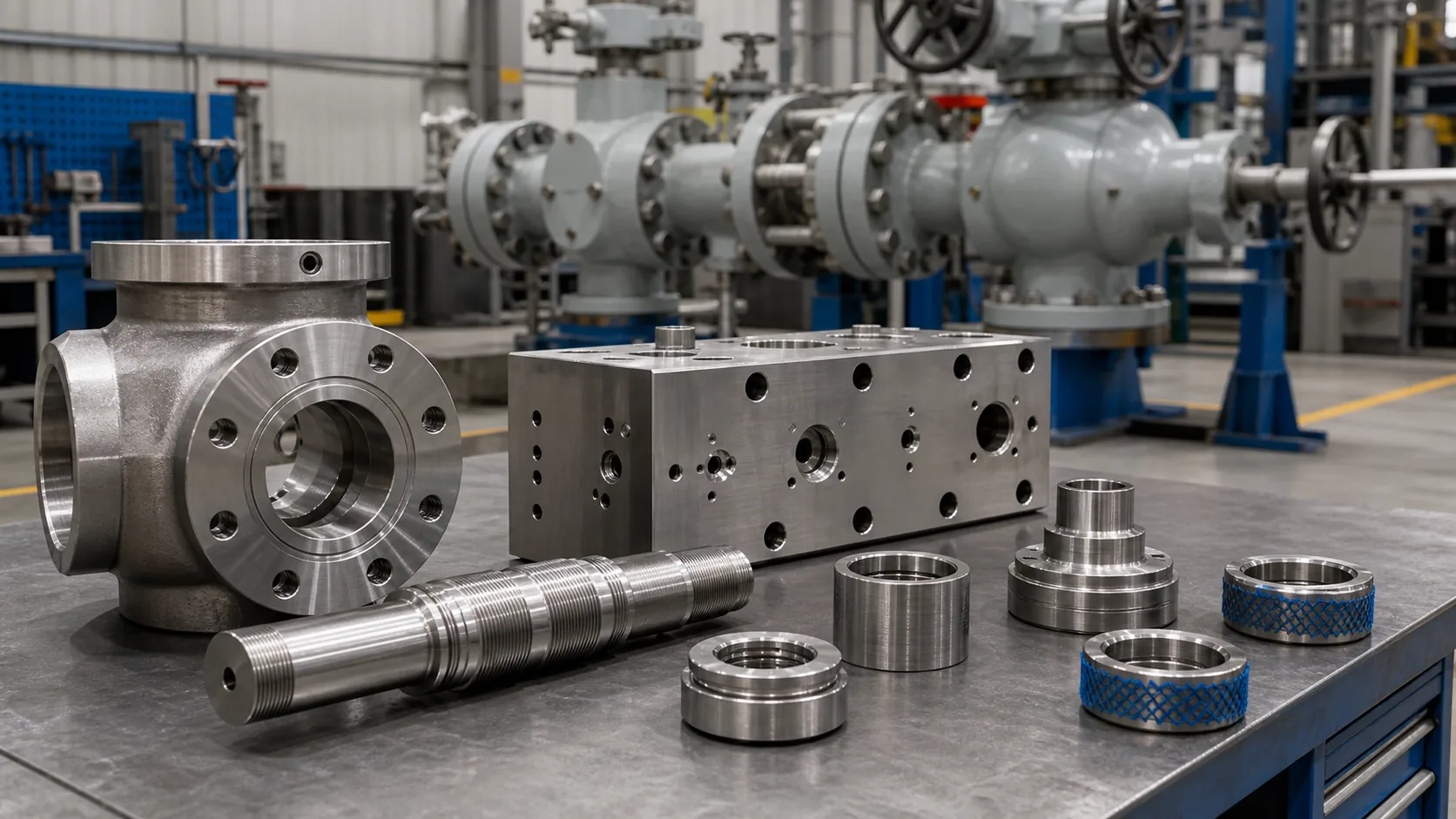
Wellhead and tree-equipment bodies, bonnets, hubs, flanges, adapters, spacers, seal carriers, stems, and actuator interfaces; Pipeline and process-valve bodies, covers, stems, seats, cages, trunnions, glands, retainers, and connection components; Downhole subs, mandrels, sleeves, collars, pistons, cones, housings, couplings, threaded connectors, and completion-tool components; Choke and kill manifold blocks, instrument blocks, fittings, nozzles, flow-control hardware, pump and compressor shafts, wear rings, and MRO spares
Material guidance
Use the exact alloy-steel grade, forging or bar specification, heat-treatment condition, hardness range, and mechanical-property requirements stated by the buyer; Use 316, 410, 17-4PH, duplex, super-duplex, or another stainless grade only where the drawing and service assessment specify that exact material and condition; Use Inconel, Hastelloy, Monel, titanium, or another nickel or special alloy only against an approved material specification, service envelope, and machining plan; Use bronze, PEEK, PTFE, or another engineering material for seats, bushings, wear, insulation, or support only by exact grade and defined pressure, temperature, fluid, and assembly conditions; ISO 15156/NACE MR0175 applicability cannot be established by alloy name alone; the buyer must define the H2S environment, qualification route, hardness and processing limits, and governing equipment code
Process review
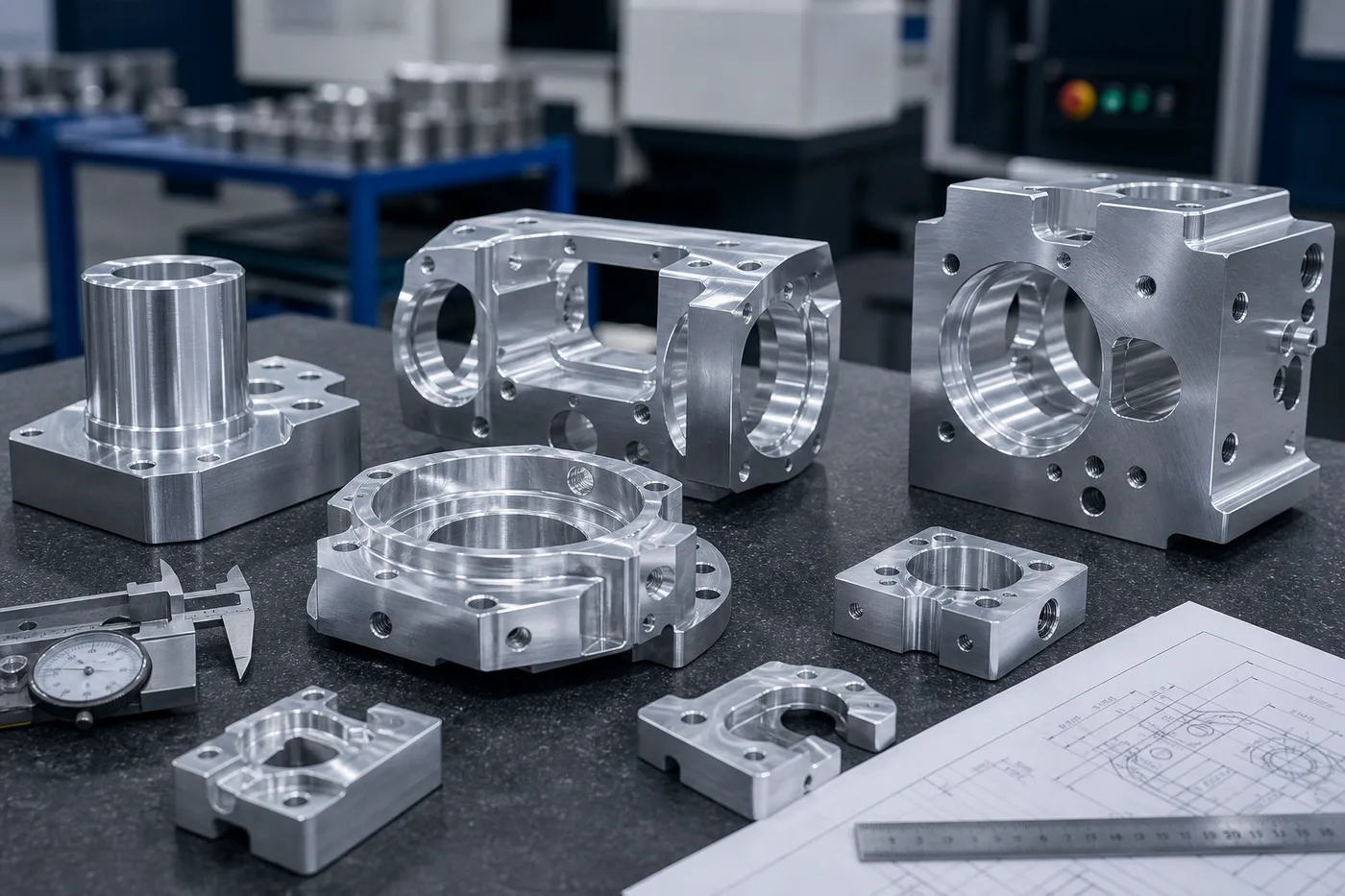
Starting-form datums, forging or casting allowance, grain-flow or orientation notes, full-cleanup surfaces, heat-treatment movement, and final-machining stock; Long-bore straightness, concentricity, runout, wall thickness, shoulders, counterbores, cross-hole intersections, pressure-boundary features, and inspection access; Special or premium thread form, lead, pitch diameter, taper, shoulder timing, root and crest condition, gauge method, and protective handling; Seal pockets, metal-to-metal seats, gasket lands, ring grooves, stem or shaft surfaces, flange faces, surface finish, edge condition, and assembled stack; Hardfacing, weld overlay, cladding, nitriding, plating, phosphate, coating, passivation, grinding, and dimensions or hardness after all secondary processes
Quality definition
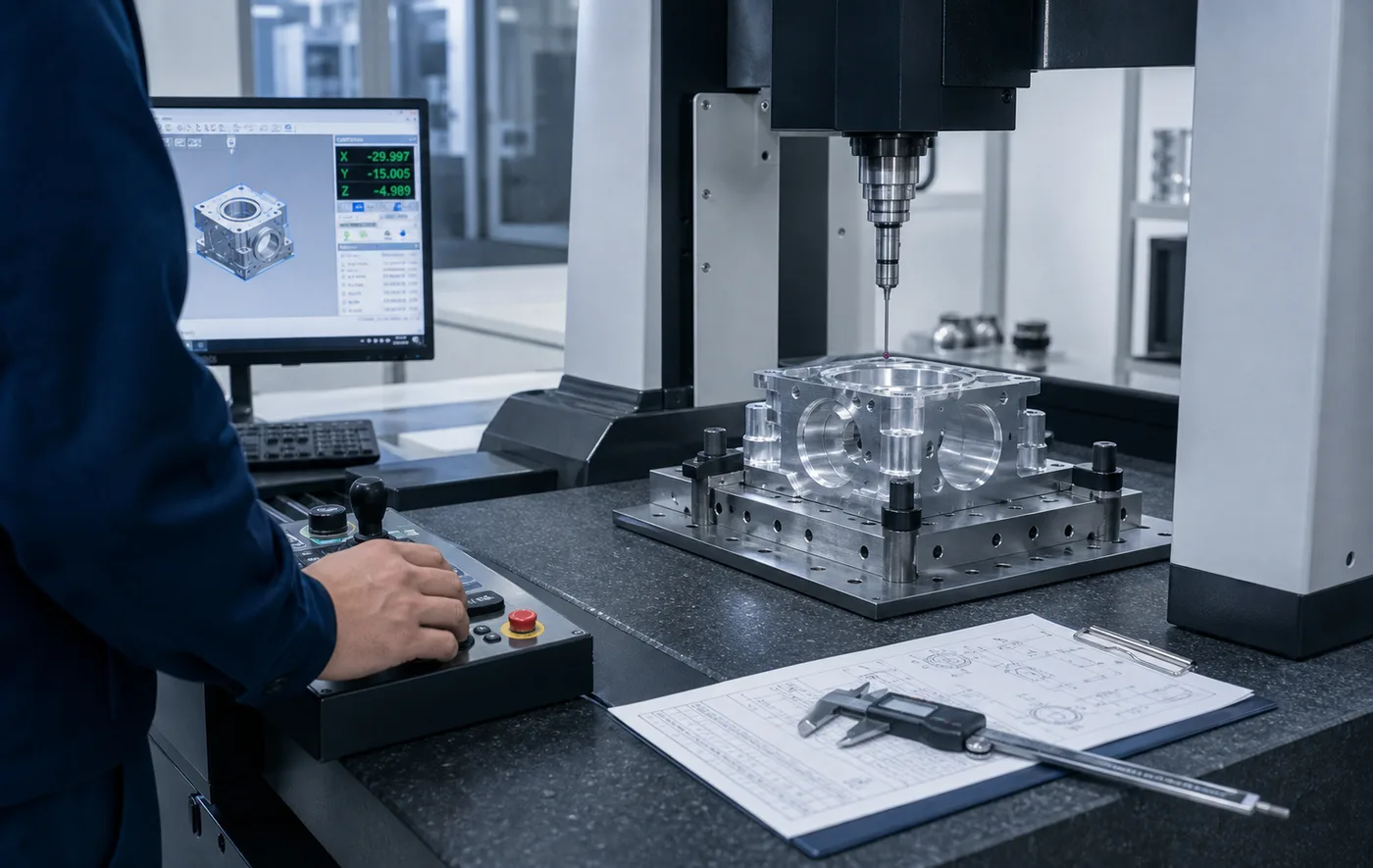
Material test report, heat and lot identity, forging or casting traceability, revision, serialization, and substitution control matched to the purchase specification; Hardness, mechanical testing, positive material identification, NDE, coating or overlay records, and special-process evidence supplied only when explicitly required; Threads, bores, wall sections, pressure and seal features, runout, concentricity, position, profile, and surface finish inspected from functional datums; Pressure or leak test defined by the buyer with test medium, pressure, hold time, temperature, setup, safety controls, acceptance criteria, witnessing, and record format; Final pressure integrity, sour-service suitability, fire performance, system assembly, field installation, and regulatory acceptance retained by the buyer's qualified program
Cost and lead time
Large or special alloy stock, qualified forging or casting source, heat or lot traceability, low-volume purchasing, and material-test documentation; Long turned parts, deep bores, heavy interrupted cuts, restricted internal access, multi-axis ports, special threads, and distortion-sensitive pressure features; Heat treatment, stress relief, hardfacing, weld overlay, cladding, coating, grinding, final machining, and multiple outside-process cycles; CMM, thread gauges, surface finish, hardness, PMI, NDE, mechanical testing, pressure testing, witness points, and document package scope; Urgent line-down delivery, reverse engineering, one-off setup, validation pieces, protected surfaces, preservation, export crating, and repeat-spare stocking
RFQ package
STEP model, controlled 2D drawing with sections, assembly reference, connection or thread details, and marked pressure or sealing boundaries; Upstream, midstream, or downstream use; surface, downhole, pipeline, plant, or offshore location; media, pressure, temperature, cycling, and corrosive constituents; Exact material and starting form, heat treatment, hardness, coating or overlay, traceability, NDE, PMI, mechanical-test, and inspection requirements; Prototype or replacement quantity, annual demand, test responsibility, required records, downtime target, delivery country, preservation, and packaging