
01 · Engineering review
We review the controlled files, process fit, missing requirements, quality scope, and quotation assumptions before sourcing.
custom injection molding manufacturer China
Buyer guide and controlled RFQ route for engineered plastic parts, DFM, mold tooling, samples, production control, supplier evidence, assembly, and export supply.
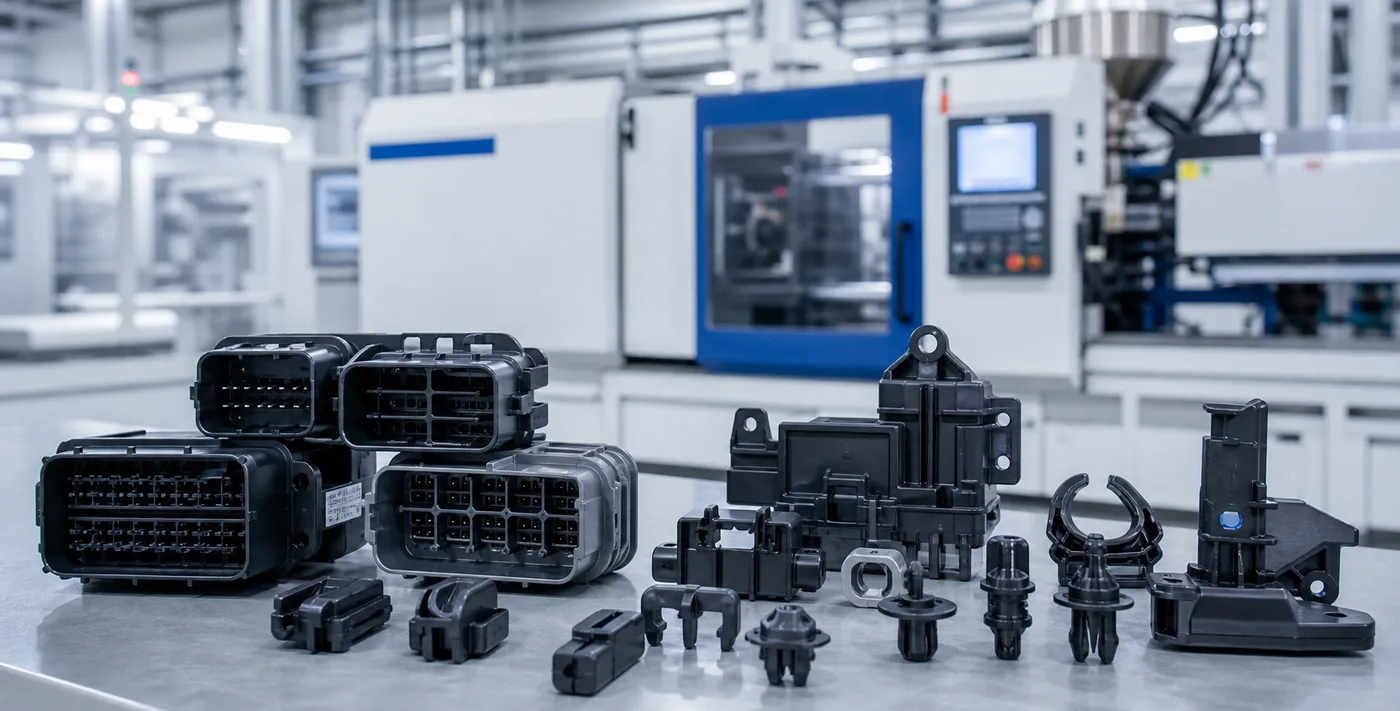
Part family
Custom Injection Molded Parts
Manufacturing route
Plastic Injection Molding
Application
Prototype Validation, Production Tooling, and Repeat Molded-Part Supply
Quote input
STEP or STP model plus a controlled PDF drawing, Resin grade, color, texture, cosmetic zones, and restricted-substance requirements, Prototype quantity, launch quantity, annual demand, target price, and delivery schedule, Assembly interfaces, critical dimensions, tests, certifications, packaging, and mold ownership expectations
Main decision
Which steps are completed in-house or by controlled partners, and who is accountable for DFM, mold design, tool build, molding, secondary operations, inspection, assembly, and shipment?
Review the manufacturing route, required files, quality controls, and delivery expectations before sending drawings.
Commercial responsibility
MakesHub manages engineering review, controlled sourcing, quotation scope, quality requirements, and delivery coordination. The exact manufacturing route is approved for each project rather than assumed from a website category.
01 · Engineering review
We review the controlled files, process fit, missing requirements, quality scope, and quotation assumptions before sourcing.
02 · Controlled sourcing
A production source is assigned only after its legal entity, manufacturing site, exact process capability, and current project evidence are approved.
03 · Written quotation
Examples and early guidance are not firm offers. The issued written quotation controls price, scope, lead time, exclusions, and validity.
04 · Production release
Uploading files starts review. Production begins only after an accepted quotation, customer purchase authorization, controlled revision, and release checks.
Website images, example specifications, and workflow scenarios are planning references. They do not prove a named factory's equipment, capacity, certification, price, or delivery performance.
Before you place an order
An upload is a request for review, not a production commitment. MakesHub should first help you understand the missing information, suitable route, price drivers, quality scope, and delivery risk.
Send Files for Engineering ReviewYou decide whether to proceed only after reviewing the written quotation.
Step 1
CAD, PDF drawings, product photos, BOM files, quantity, material, tolerance, finish, quality needs, and delivery country.
Step 2
We identify missing inputs, process or material alternatives, critical cost drivers, inspection needs, and project risks.
Step 3
A firm quotation requires eligible supplier capability and cost evidence for the controlled technical and commercial scope.
Step 4
You see the quoted scope, price, lead time, assumptions, exclusions, validity, and next approval step before committing.
Quotation transparency
No service should be hidden inside an unexplained unit price. Applicable charges and exclusions belong in the written quotation, using the same controlled project scope.
Quantity-based part pricing for the reviewed material, process, finish, tolerance, and inspection scope.
Molds, dies, fixtures, trial parts, or first-article work are shown separately when the project requires them.
DFM, drawing work, CMM, FAI, PPAP, certificates, or third-party inspection are itemized when applicable.
Special packaging, freight, Incoterm, named place, duties, and taxes are stated or explicitly excluded.
Response planning
These are internal operating targets, not guarantees. The issued quotation controls the actual response, price, production, and delivery timing for each project.
Initial response target
Within 2 business hours
For a valid drawing-led RFQ received during the sales working day.
Standard quote target
Within 24 hours
After sufficient specifications and eligible supplier evidence are available.
Complex quote target
Within 48 hours or a status update
For tooling, special processes, incomplete files, or multi-supplier review.
China supplier selection guide
Choose a custom injection molding manufacturer in China only after confirming who owns the part DFM, mold design, tool build, trials, molded-part production, secondary operations, inspection, packaging, and engineering changes. A useful quotation makes those boundaries visible and connects the mold investment to an approved part, expected annual demand, measurable quality plan, and repeatable production route rather than presenting one unexplained tooling price and unit price.
Industry-specific sourcing decisions
Choose a custom injection molding manufacturer in China only after confirming who owns the part DFM, mold design, tool build, trials, molded-part production, secondary operations, inspection, packaging, and engineering changes. A useful quotation makes those boundaries visible and connects the mold investment to an approved part, expected annual demand, measurable quality plan, and repeatable production route rather than presenting one unexplained tooling price and unit price.
Project-specific decision examples
A housing includes clips, bosses, vents, a display opening, a textured exterior, hidden mating surfaces, printed markings, and an internal PCB assembly. Prototype appearance is acceptable, but the design has not yet been checked for production draft, sink, warp, gate evidence, or assembly stack-up.
Freeze functional and cosmetic zones first, complete wall and draft DFM, agree gate and parting-line evidence, validate molded samples with the populated assembly, then release texture and decoration after geometry is stable.
The component must retain terminals, mate with an existing connector system, tolerate temperature and moisture exposure, control keyway and latch geometry, and ship in volumes distributed across several scheduled batches.
Confirm the exact conditioned resin behavior, fiber and warp risk, terminal and mating gauges, cavity traceability, critical dimensions, functional tests, packaging orientation, and change-control evidence before comparing production price.
A plastic body captures metal inserts, requires controlled insert position and pull strength, receives a laser mark, and is assembled with a seal and purchased hardware before export packaging.
Quote the insert, molding, verification, marking, seal and hardware BOM, assembly, testing, traceability, and packaging as one controlled route; approve production-intent samples after every required operation rather than approving bare molded parts only.
Product to delivery chain
Confirm supplier fit, process fit, material or application fit, quality risk, quote inputs, and delivery expectations before committing to production.
Define Custom Injection Molded Parts geometry, function, quantity, and application.
Review whether Plastic Injection Molding fits the part geometry, tolerance, material, and volume.
Confirm tolerance, finish, inspection notes, certification, packaging, and delivery expectations.
Upload files and project details so sales and engineering can review the request and prepare a quotation.
Prototype to production
A practical sourcing project starts with the requirement, confirms manufacturability, reviews samples, prepares the quotation, and then moves toward production and delivery.
Clarify Custom Injection Molded Parts, drawings, application, material, quantity, and target delivery.
Check whether Plastic Injection Molding is suitable or whether another process is better.
Confirm quote drivers, tooling or setup, sample needs, inspection notes, and packaging.
Move approved parts into repeatable production, quality inspection, and export delivery.
Visual manufacturing path
Use the image chain to understand how drawings become a reviewed process, an application-ready part, an inspection plan, and protected delivery.

Review CAD, dimensions, material, tolerance, finish, and missing quotation inputs.
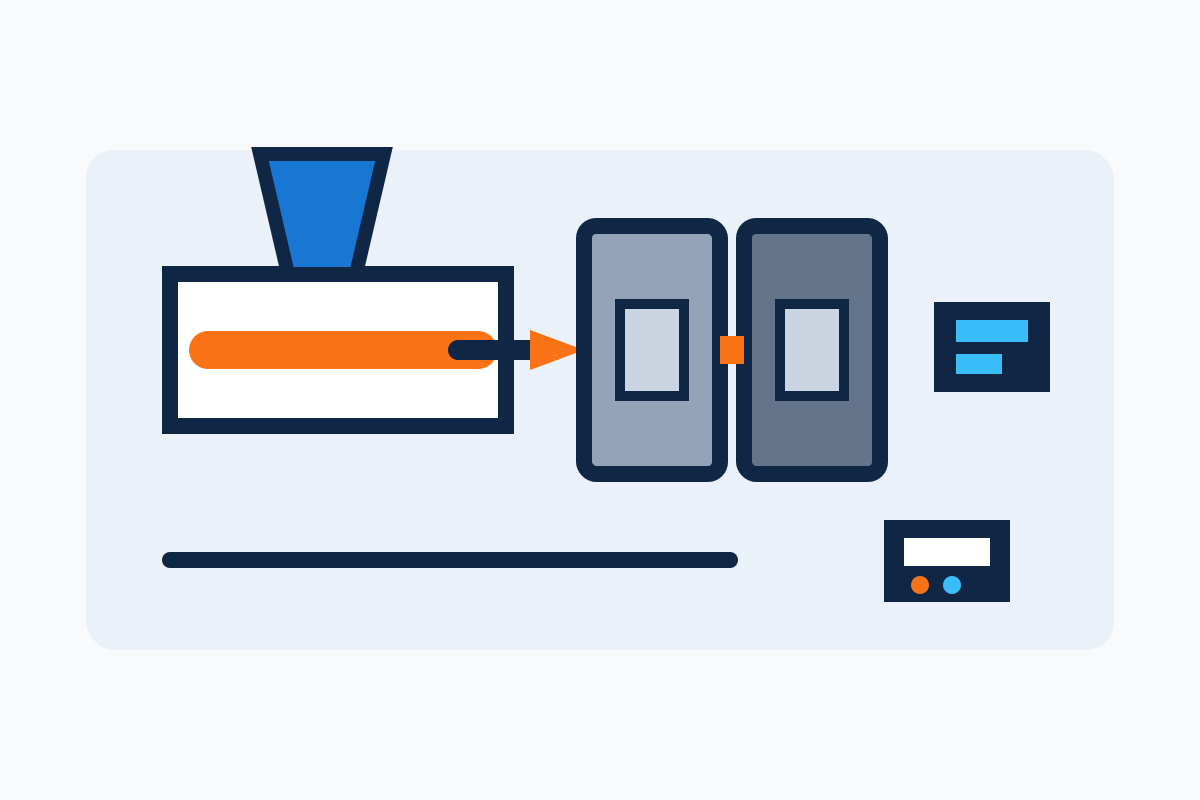
Review resin, tool design, gate strategy, shrinkage, critical dimensions, and repeat production requirements.
Connect molding requirements to identifiable housings, covers, clips, connectors, and repeat-production components.
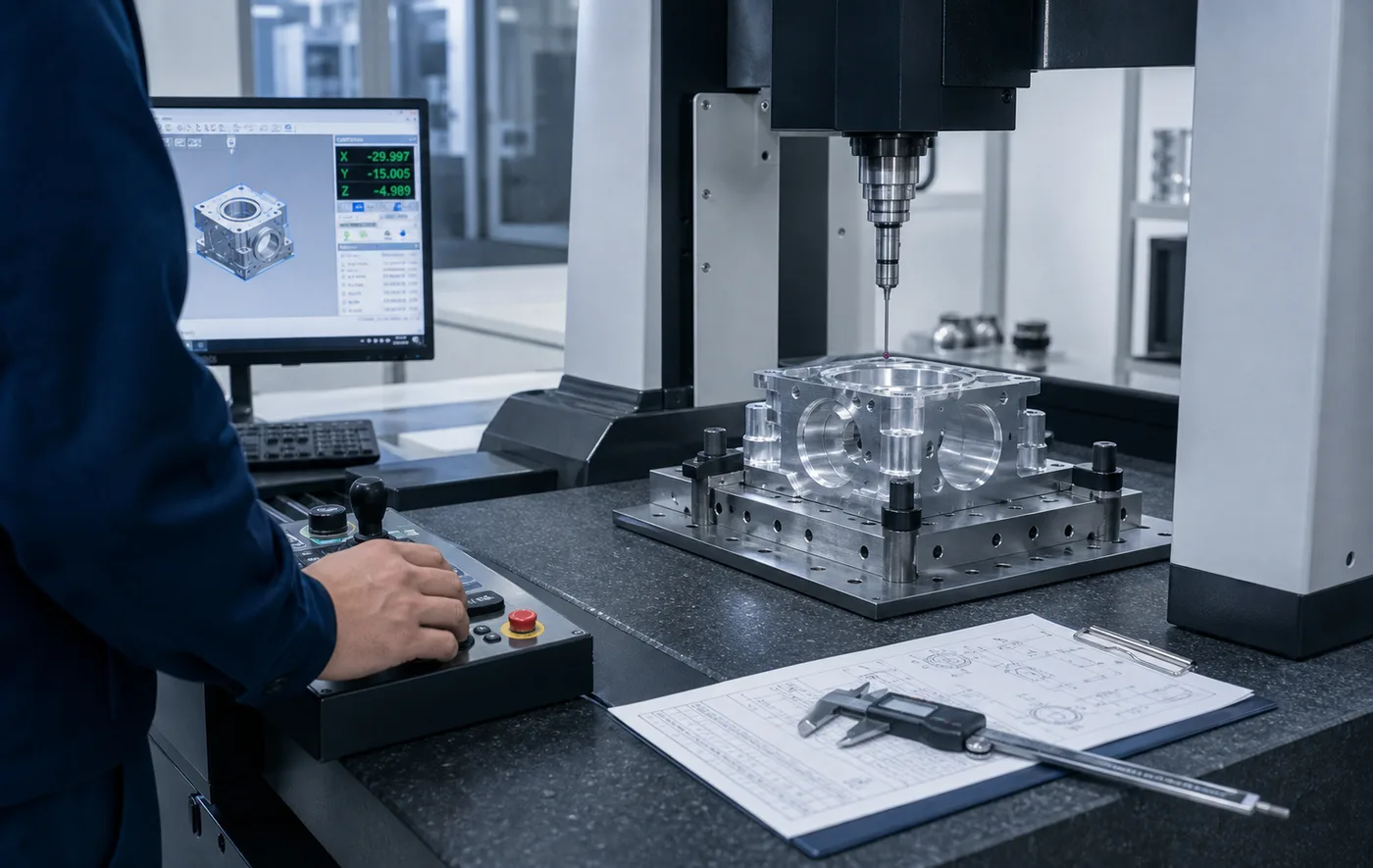
Plan dimensional inspection, critical features, surface checks, and supporting documentation.
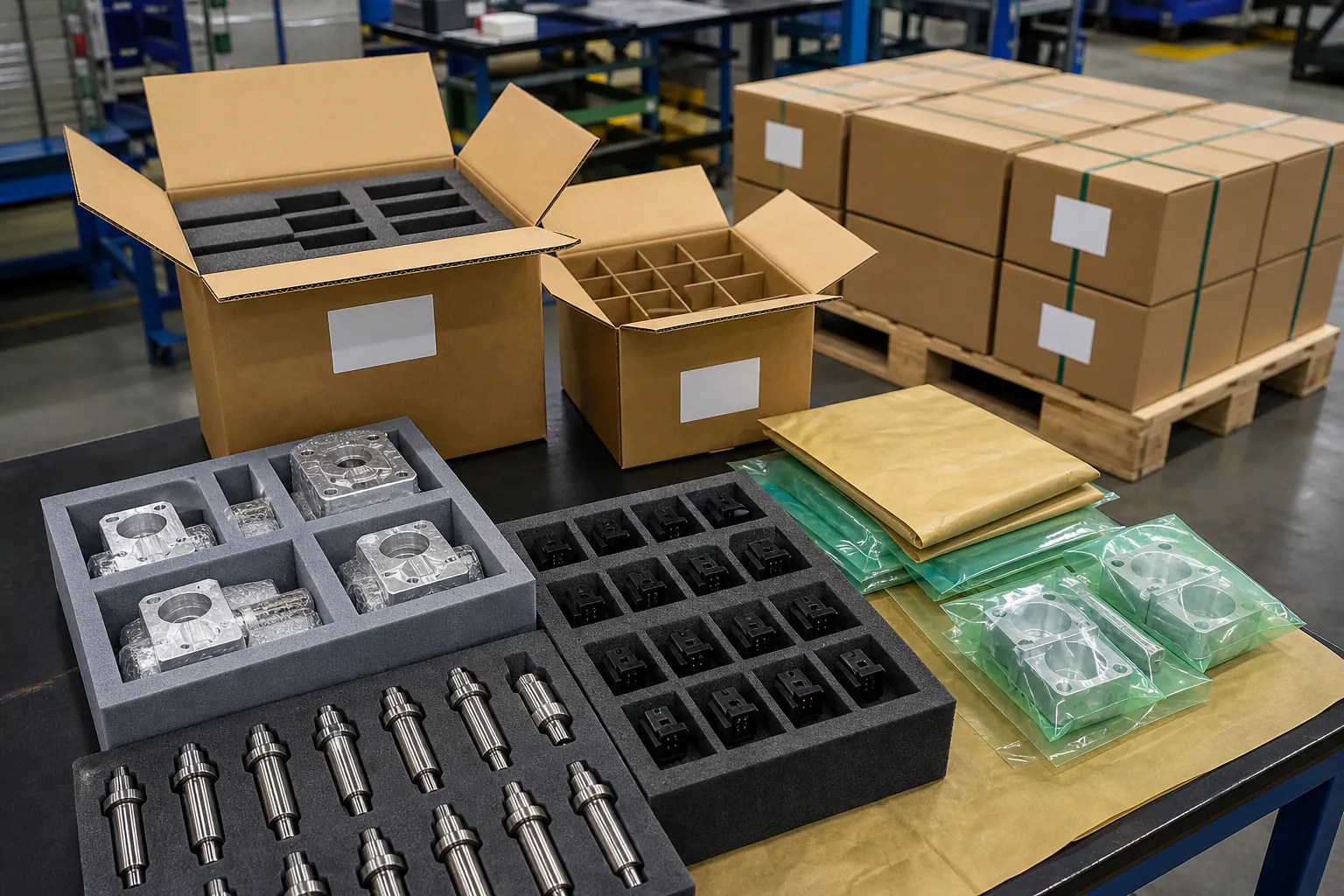
Separate finished parts, protect surfaces and metal, label batches, and prepare export packaging.
Manufacturing specifications
Use these specifications to judge process fit, material fit, quality risk, quote inputs, and delivery expectations without relying on broad marketing claims.
Engineering detail
This section gives search visitors the hard sourcing details that usually matter before sending drawings: process fit, material fit, tolerance, finish, quality risk, quote blockers, and production planning.
What sales will review
Functional housings, covers, bezels, battery or electronics enclosures, and structural plastic components with cosmetic and assembly requirements, Automotive and industrial connectors, clips, retainers, brackets, cable-management parts, sensor bodies, and terminal-support components, Gears, bushings, guides, knobs, handles, latches, fluid-control components, and wear-resistant engineering-plastic parts, Insert-molded, overmolded, soft-touch, sealed, labeled, decorated, ultrasonically welded, assembled, or individually packed plastic components
Review nominal and transitional wall thickness, draft direction, ribs, bosses, coring, radii, snap features, threads, inserts, undercuts, and steel-safe dimensions before tool release., Agree the parting line, gate type and location, runner concept, venting, ejector marks, witness lines, weld lines, sink risk, texture boundaries, and allowed cosmetic evidence on controlled views., Select cavity count, hot or cold runner, mold steel, interchangeable inserts, slides, lifters, cooling, sensing, and expected tool life from volume, resin, geometry, quality, and maintenance needs., Define resin drying, color control, material handling, mold temperature, fill and pack behavior, cooling, ejection, trimming, and a stable processing window before production approval., Plan inserts, overmolding, printing, painting, plating, laser marking, welding, hardware installation, assembly, testing, and packaging as part of the production route rather than treating them as late additions., Use revision-controlled CAD, drawings, DFM records, tool changes, sample reports, process settings, cavity identification, and approved deviations so repeat orders do not drift from the accepted part.
Mold architecture: part size, cavity count, runner system, steel, slides, lifters, inserts, cooling, texture, expected life, spare components, and ownership or transfer requirements, Part design: shot weight, wall profile, ribs and bosses, undercuts, tight tolerances, cosmetic zones, difficult ejection, cycle time, scrap risk, and automation needs, Material: exact resin grade, filler, color, drying, market availability, compliance documentation, substitution restrictions, regrind policy, and purchase quantity, Production scope: trials, samples, inspection, gauges, insert molding, overmolding, trimming, decorating, welding, assembly, testing, labeling, individual packing, and export cartons, Commercial plan: prototype and launch quantities, annual demand, batch schedule, MOQ, forecast stability, mold amortization, inventory policy, delivery terms, and engineering-change risk
Identify critical-to-quality dimensions, datums, mating features, seal or electrical interfaces, gauge strategy, sampling frequency, and measurement condition on the drawing and inspection plan., Approve first articles from representative cavities after the intended resin, color, texture, and secondary operations are applied; record dimensional, cosmetic, functional, and assembly results., Define acceptable color range, gloss, texture, parting-line evidence, gate vestige, ejector evidence, flash, sink, warp, weld-line visibility, contamination, scratches, and packaging contact points., Request resin certificates, lot traceability, restricted-substance declarations, flame or application-specific documentation only where the project requires them, and state who verifies final compliance., Use cavity or batch traceability, startup approval, in-process checks, final inspection, nonconformance control, and retained samples in proportion to part risk and production volume., Validate fit, torque, pull, leak, electrical, thermal, environmental, aging, or drop performance in the real assembly where needed; a dimensional report alone does not prove application performance.
Upload CAD files, PDF drawings, product photos, material notes, quantity, tolerance, finish, delivery target, and any existing supplier specifications.
Sales and engineering review process fit, material, tolerance, quantity, finish, application, delivery needs, and uploaded files before preparing the quotation.
An early review can use lawful product photos, rough drawings, samples, or BOM files. A firm quotation still depends on controlled technical files, resolved requirements, eligible supplier evidence, and a current written scope.
Typical projects include Functional housings, covers, bezels, battery or electronics enclosures, and structural plastic components with cosmetic and assembly requirements, Automotive and industrial connectors, clips, retainers, brackets, cable-management parts, sensor bodies, and terminal-support components, Gears, bushings, guides, knobs, handles, latches, fluid-control components, and wear-resistant engineering-plastic parts, Insert-molded, overmolded, soft-touch, sealed, labeled, decorated, ultrasonically welded, assembled, or individually packed plastic components. Final process selection depends on the drawing, material, quantity, and functional requirements.
Identify critical-to-quality dimensions, datums, mating features, seal or electrical interfaces, gauge strategy, sampling frequency, and measurement condition on the drawing and inspection plan.; Approve first articles from representative cavities after the intended resin, color, texture, and secondary operations are applied; record dimensional, cosmetic, functional, and assembly results.; Define acceptable color range, gloss, texture, parting-line evidence, gate vestige, ejector evidence, flash, sink, warp, weld-line visibility, contamination, scratches, and packaging contact points.; Request resin certificates, lot traceability, restricted-substance declarations, flame or application-specific documentation only where the project requires them, and state who verifies final compliance.; Use cavity or batch traceability, startup approval, in-process checks, final inspection, nonconformance control, and retained samples in proportion to part risk and production volume.; Validate fit, torque, pull, leak, electrical, thermal, environmental, aging, or drop performance in the real assembly where needed; a dimensional report alone does not prove application performance.. State the required inspection and documentation scope in the RFQ rather than assuming it is included.
Upload drawings, product photos, material requirements, quantity, target price, tolerance, finish, and delivery expectations so sales can review the project.
Start RFQ