
01 · Engineering review
We review the controlled files, process fit, missing requirements, quality scope, and quotation assumptions before sourcing.
CNC machining services China
MakesHub reviews and sources CNC machining RFQs in China for metal and plastic precision parts, with controlled files, supplier evidence, finishing, inspection, and written export quotes.
Part family
Custom CNC Machined Parts
Manufacturing route
CNC Machining
Application
Prototype, Low-Volume, and Repeat Production Parts
Quote input
STEP or STP model, PDF drawing with critical tolerances, Material grade and finish, Quantity, annual demand, and delivery target
Main decision
Which CNC route and number of setups fit the geometry and critical feature relationships?
Review the manufacturing route, required files, quality controls, and delivery expectations before sending drawings.
Commercial responsibility
MakesHub manages engineering review, controlled sourcing, quotation scope, quality requirements, and delivery coordination. The exact manufacturing route is approved for each project rather than assumed from a website category.
01 · Engineering review
We review the controlled files, process fit, missing requirements, quality scope, and quotation assumptions before sourcing.
02 · Controlled sourcing
A production source is assigned only after its legal entity, manufacturing site, exact process capability, and current project evidence are approved.
03 · Written quotation
Examples and early guidance are not firm offers. The issued written quotation controls price, scope, lead time, exclusions, and validity.
04 · Production release
Uploading files starts review. Production begins only after an accepted quotation, customer purchase authorization, controlled revision, and release checks.
Website images, example specifications, and workflow scenarios are planning references. They do not prove a named factory's equipment, capacity, certification, price, or delivery performance.
Before you place an order
An upload is a request for review, not a production commitment. MakesHub should first help you understand the missing information, suitable route, price drivers, quality scope, and delivery risk.
Send Files for Engineering ReviewYou decide whether to proceed only after reviewing the written quotation.
Step 1
CAD, PDF drawings, product photos, BOM files, quantity, material, tolerance, finish, quality needs, and delivery country.
Step 2
We identify missing inputs, process or material alternatives, critical cost drivers, inspection needs, and project risks.
Step 3
A firm quotation requires eligible supplier capability and cost evidence for the controlled technical and commercial scope.
Step 4
You see the quoted scope, price, lead time, assumptions, exclusions, validity, and next approval step before committing.
Quotation transparency
No service should be hidden inside an unexplained unit price. Applicable charges and exclusions belong in the written quotation, using the same controlled project scope.
Quantity-based part pricing for the reviewed material, process, finish, tolerance, and inspection scope.
Molds, dies, fixtures, trial parts, or first-article work are shown separately when the project requires them.
DFM, drawing work, CMM, FAI, PPAP, certificates, or third-party inspection are itemized when applicable.
Special packaging, freight, Incoterm, named place, duties, and taxes are stated or explicitly excluded.
Response planning
These are internal operating targets, not guarantees. The issued quotation controls the actual response, price, production, and delivery timing for each project.
Initial response target
Within 2 business hours
For a valid drawing-led RFQ received during the sales working day.
Standard quote target
Within 24 hours
After sufficient specifications and eligible supplier evidence are available.
Complex quote target
Within 48 hours or a status update
For tooling, special processes, incomplete files, or multi-supplier review.
China supplier selection guide
CNC machining services in China are a practical fit when a part can be cut from metal or engineering-plastic stock and the buyer can define geometry, material, critical tolerances, surface finish, quantity, inspection, and delivery needs. Compare quotations only after confirming whether milling, turning, multi-axis work, deburring, finishing, inspection, packaging, and export delivery are included; a lower unit price with a different scope is not a like-for-like offer.
Industry-specific sourcing decisions
CNC machining services in China are a practical fit when a part can be cut from metal or engineering-plastic stock and the buyer can define geometry, material, critical tolerances, surface finish, quantity, inspection, and delivery needs. Compare quotations only after confirming whether milling, turning, multi-axis work, deburring, finishing, inspection, packaging, and export delivery are included; a lower unit price with a different scope is not a like-for-like offer.
Project-specific decision examples
A 6061 enclosure needs several milled pockets, connector openings, threaded holes, a cosmetic exterior, and black anodizing for an engineering validation build.
Confirm datum strategy, minimum wall and corner radii, thread depth, masking, cosmetic faces, sample quantity, dimensional report, and protective packaging before comparing quotes.
A stainless shaft family has bearing fits, threads, concentric features, and monthly demand after initial samples are approved.
Quote the family by diameter and setup logic, define fit and concentricity inspection, approve the first article, then compare batch pricing with material and tool-wear controls included.
A compact manifold combines angled ports, sealing faces, deep passages, threads, and positional relationships that are sensitive to setup changes.
Compare 3+2 or 5-axis strategies, identify features that need special tooling or probing, define cleaning and pressure-test expectations, and require evidence for the critical interfaces.
Product to delivery chain
Confirm supplier fit, process fit, material or application fit, quality risk, quote inputs, and delivery expectations before committing to production.
Define Custom CNC Machined Parts geometry, function, quantity, and application.
Review whether CNC Machining fits the part geometry, tolerance, material, and volume.
Confirm tolerance, finish, inspection notes, certification, packaging, and delivery expectations.
Upload files and project details so sales and engineering can review the request and prepare a quotation.
Prototype to production
A practical sourcing project starts with the requirement, confirms manufacturability, reviews samples, prepares the quotation, and then moves toward production and delivery.
Clarify Custom CNC Machined Parts, drawings, application, material, quantity, and target delivery.
Check whether CNC Machining is suitable or whether another process is better.
Confirm quote drivers, tooling or setup, sample needs, inspection notes, and packaging.
Move approved parts into repeatable production, quality inspection, and export delivery.
Visual manufacturing path
Use the image chain to understand how drawings become a reviewed process, an application-ready part, an inspection plan, and protected delivery.

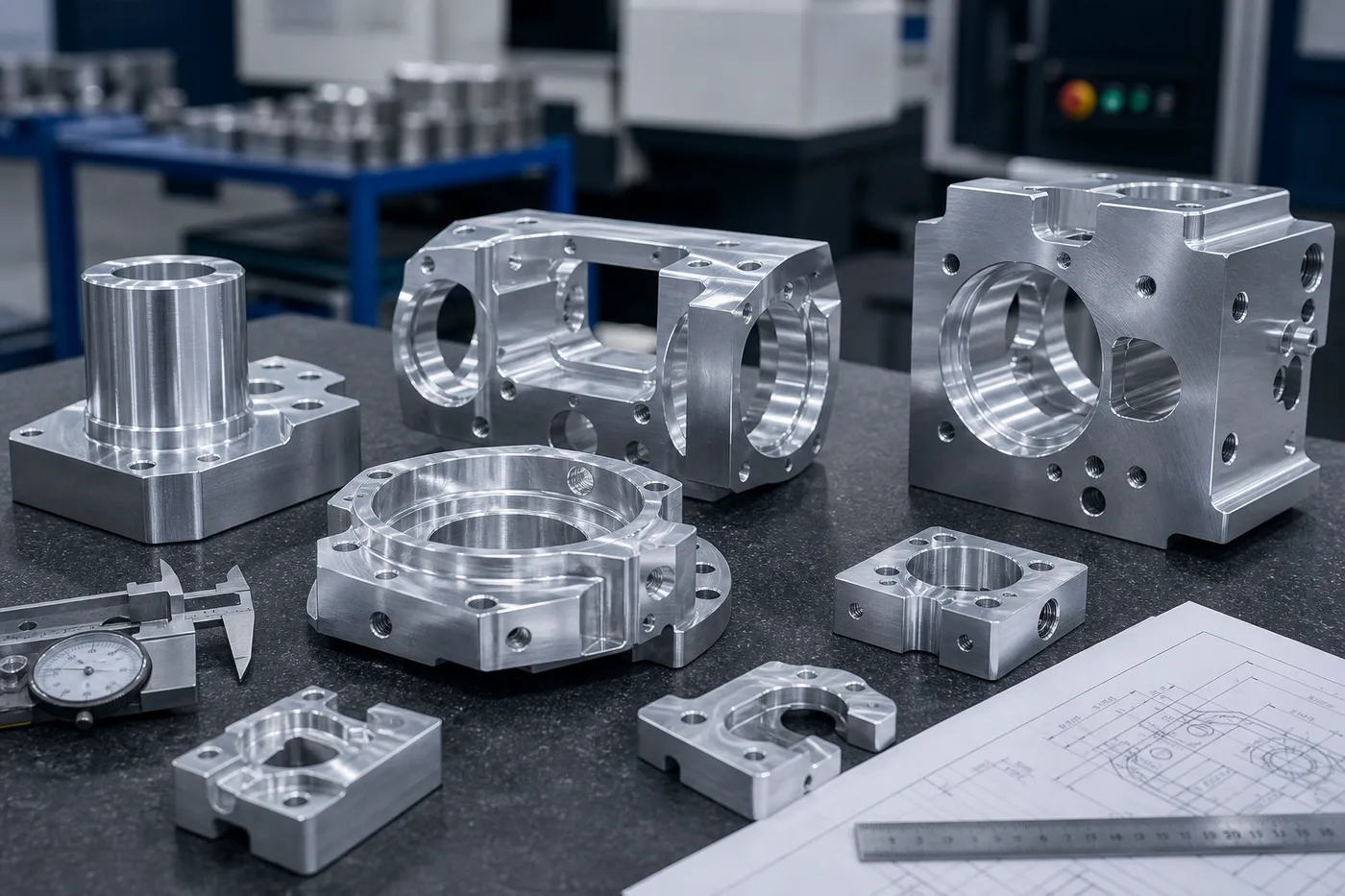
Review CAD, dimensions, material, tolerance, finish, and missing quotation inputs.
Review the machining route, setup and datum plan, tool access, burr control, secondary operations, and inspection evidence before production.
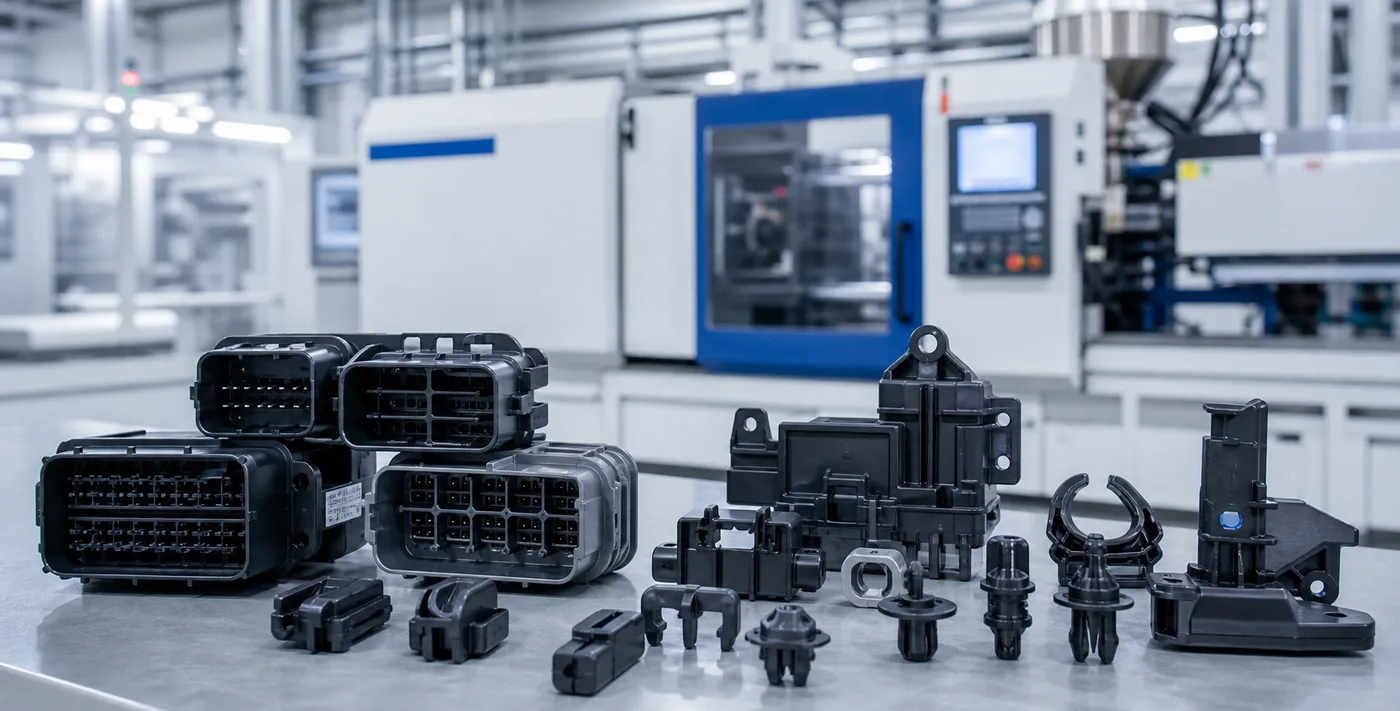
Connect molding requirements to identifiable housings, covers, clips, connectors, and repeat-production components.
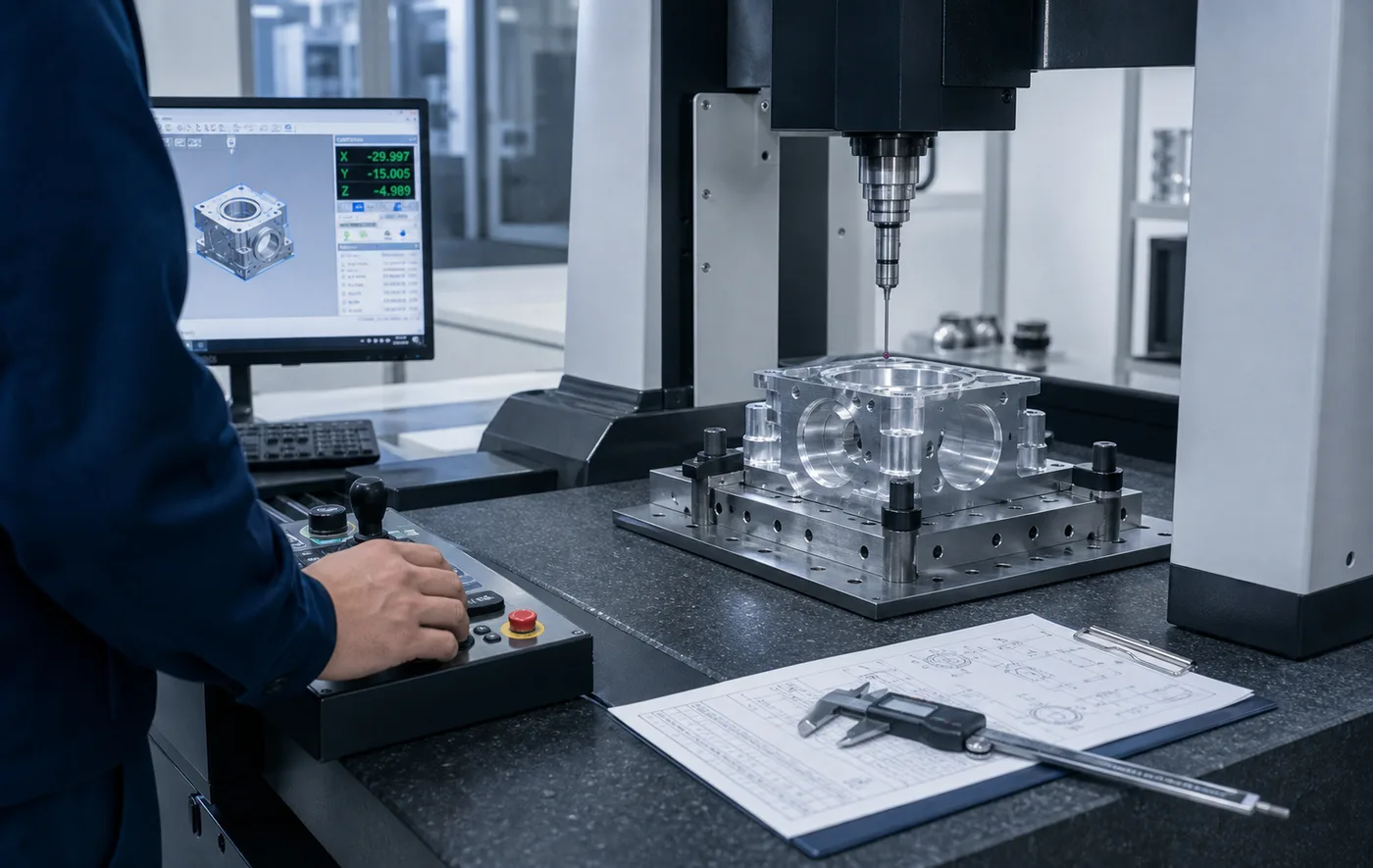
Plan dimensional inspection, critical features, surface checks, and supporting documentation.
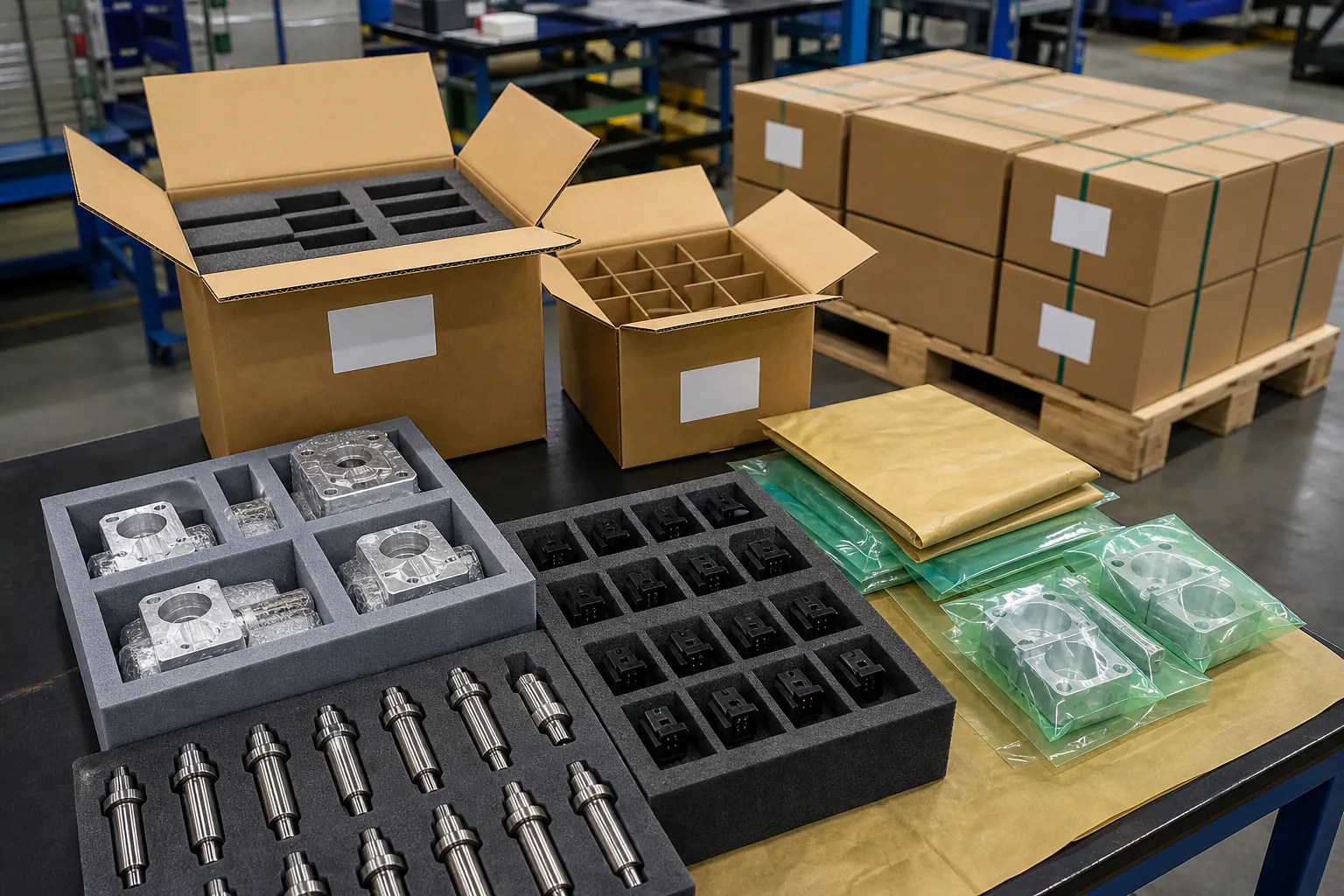
Separate finished parts, protect surfaces and metal, label batches, and prepare export packaging.
Manufacturing specifications
Use these specifications to judge process fit, material fit, quality risk, quote inputs, and delivery expectations without relying on broad marketing claims.
Engineering detail
This section gives search visitors the hard sourcing details that usually matter before sending drawings: process fit, material fit, tolerance, finish, quality risk, quote blockers, and production planning.
What sales will review
Milled aluminum housings, brackets, plates, heat sinks, covers, fixtures, and machine components, Turned stainless-steel shafts, bushings, spacers, threaded adapters, pins, and cylindrical components, Multi-face manifolds, robotic mounts, optical or sensor housings, and compact parts that benefit from fewer setups, Machined POM, nylon, ABS, polycarbonate, PTFE, or PEEK prototypes, isolators, guides, and functional components
Separate prismatic milling features, turned rotational features, multi-face access, deep pockets, thin walls, threads, undercuts, and secondary operations, Define datums and critical feature relationships so the setup plan protects positional, concentricity, flatness, and sealing requirements, Review whether 3-axis, 3+2, simultaneous 5-axis, live-tool turning, grinding, EDM, or another route is actually required, Identify deburring, tapping, inserts, heat treatment, anodizing, plating, passivation, painting, laser marking, and assembly in the quotation scope, Use a sample or first-article stage when the design has close fits, cosmetic surfaces, several setups, or a new material and finish combination
Raw-material grade, stock size, minimum purchase quantity, certification, and current availability, Number of setups, workholding, fixture needs, tool access, deep cavities, thin walls, and small internal radii, Critical tolerance, datum relationships, surface roughness, inspection programming, gauges, and documentation, Threads, inserts, grinding, EDM, heat treatment, anodizing, plating, passivation, painting, marking, or assembly, Prototype quantity, repeat-batch quantity, annual demand, setup amortization, and economic material utilization, Cosmetic protection, custom packaging, shipment method, delivery country, Incoterm, and required lead time
Mark critical-to-quality dimensions, datums, fits, threads, sealing faces, cosmetic surfaces, and functional interfaces on the drawing, State the required dimensional report, sampling level, first-article record, material certificate, finish certificate, or other evidence, Match the inspection method to the feature: CMM, height gauge, micrometer, bore gauge, thread gauge, optical measurement, roughness tester, or fixture, Treat a general tolerance such as +/-0.05 mm only as a review starting point; tighter features such as +/-0.01 mm require drawing-specific setup and inspection confirmation, Define surface roughness, deburring, edge condition, color, gloss, masking, and acceptable cosmetic variation where appearance or sealing matters, Specify part separation, protective film, cavity packaging, labels, corrosion protection, and carton limits for export delivery
Upload CAD files, PDF drawings, product photos, material notes, quantity, tolerance, finish, delivery target, and any existing supplier specifications.
Sales and engineering review process fit, material, tolerance, quantity, finish, application, delivery needs, and uploaded files before preparing the quotation.
An early review can use lawful product photos, rough drawings, samples, or BOM files. A firm quotation still depends on controlled technical files, resolved requirements, eligible supplier evidence, and a current written scope.
Typical projects include Milled aluminum housings, brackets, plates, heat sinks, covers, fixtures, and machine components, Turned stainless-steel shafts, bushings, spacers, threaded adapters, pins, and cylindrical components, Multi-face manifolds, robotic mounts, optical or sensor housings, and compact parts that benefit from fewer setups, Machined POM, nylon, ABS, polycarbonate, PTFE, or PEEK prototypes, isolators, guides, and functional components. Final process selection depends on the drawing, material, quantity, and functional requirements.
Mark critical-to-quality dimensions, datums, fits, threads, sealing faces, cosmetic surfaces, and functional interfaces on the drawing; State the required dimensional report, sampling level, first-article record, material certificate, finish certificate, or other evidence; Match the inspection method to the feature: CMM, height gauge, micrometer, bore gauge, thread gauge, optical measurement, roughness tester, or fixture; Treat a general tolerance such as +/-0.05 mm only as a review starting point; tighter features such as +/-0.01 mm require drawing-specific setup and inspection confirmation; Define surface roughness, deburring, edge condition, color, gloss, masking, and acceptable cosmetic variation where appearance or sealing matters; Specify part separation, protective film, cavity packaging, labels, corrosion protection, and carton limits for export delivery. State the required inspection and documentation scope in the RFQ rather than assuming it is included.
Upload drawings, product photos, material requirements, quantity, target price, tolerance, finish, and delivery expectations so sales can review the project.
Start RFQ