Typical parts
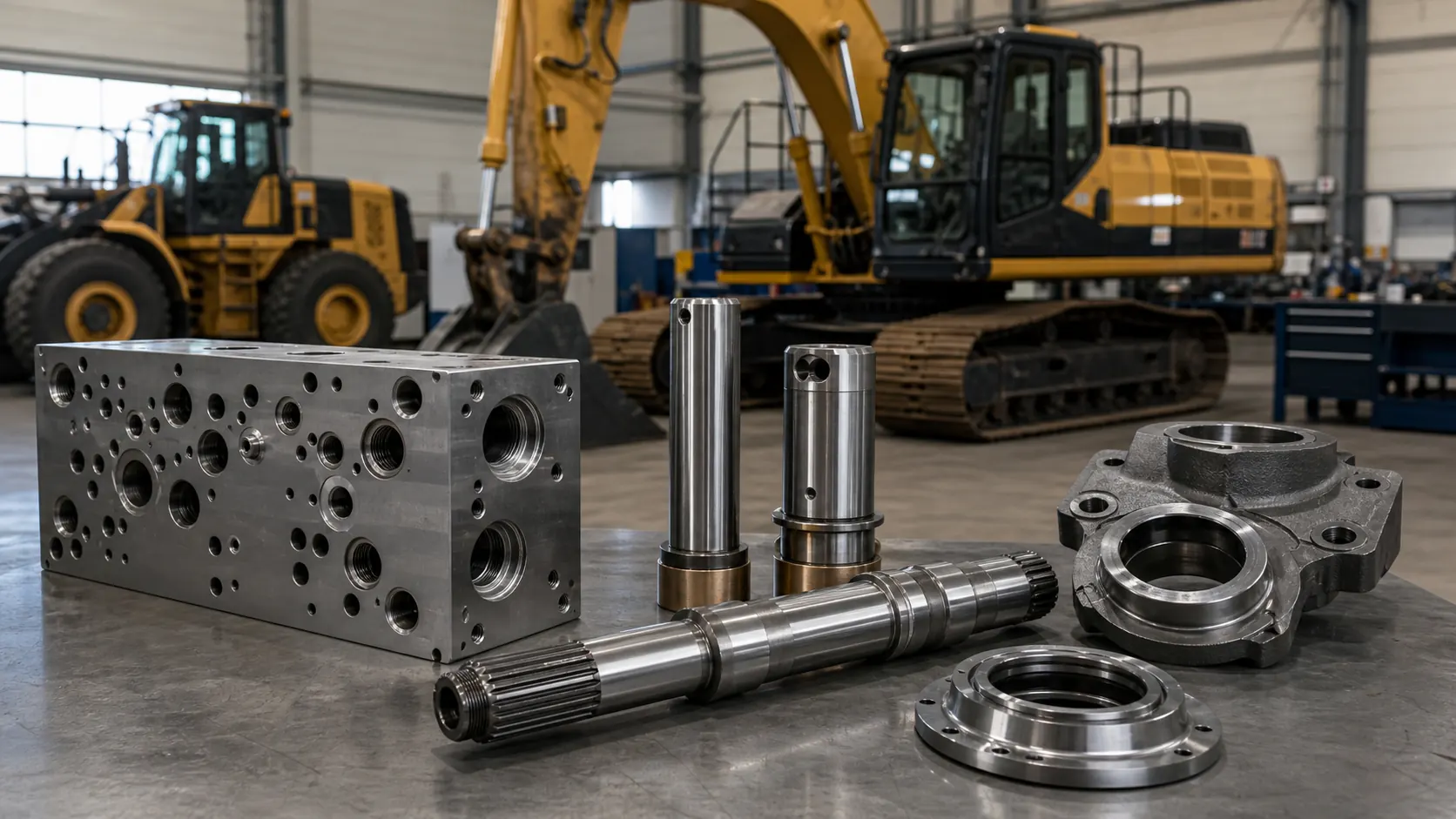
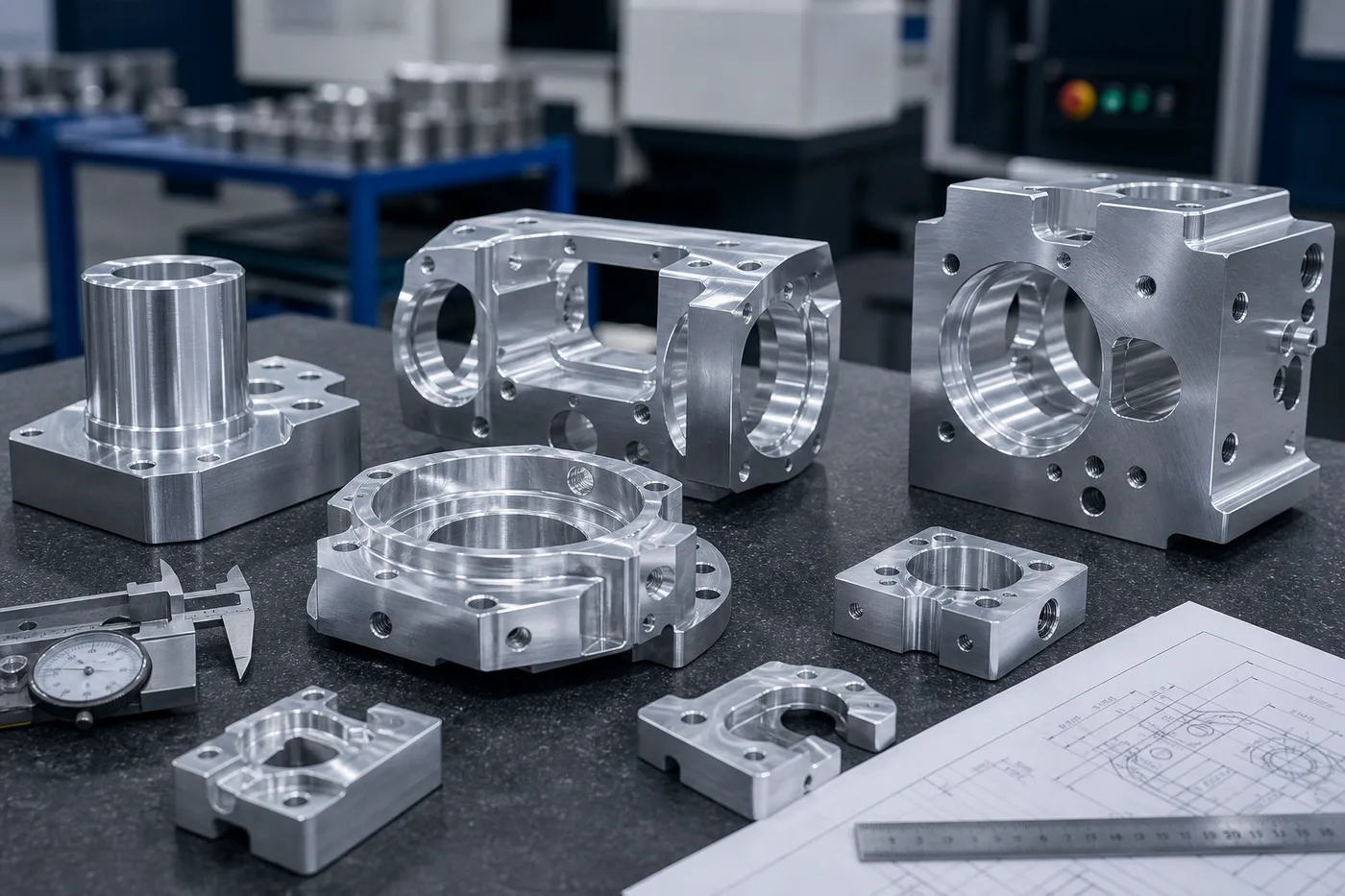
Excavator, loader, backhoe, telehandler, access-equipment, and attachment pins, bushings, sleeves, trunnions, retainers, spacers, pivot bosses, and cylinder-mounting interfaces; Swing, drive, axle, gearbox, paver, roller, conveyor, winch, and auger shafts, hubs, bearing carriers, seal housings, couplings, flanges, sprocket interfaces, and selectively machined cast or forged blanks; Hydraulic manifolds, valve blocks, pump and motor housings, cartridge cavities, port plates, cylinder gland and piston components, seal carriers, lubrication blocks, and protected flow components; Concrete-pump, batching, paving, compaction, road-milling, trenching, lifting, and jobsite-support machine plates, guides, rollers, brackets, wear-part interfaces, service tools, fixtures, and controlled MRO replacements
Material guidance
Use the exact carbon or alloy-steel grade, bar or forging specification, cleanliness, section size, heat-treatment condition, core properties, surface hardness, case depth, and test requirements stated by the approved drawing; Use familiar grades such as 4140, 4340, 42CrMo4, 17-4PH, or nitriding steel only when the buyer defines the governing standard, condition, treatment sequence, section response, finish allowance, and acceptance evidence; Select bronze, steel-backed bearing material, cast iron, stainless steel, aluminum, or engineering plastic from the actual load, motion, lubrication, contamination, corrosion, temperature, pressure, and mating-material conditions rather than from a part-name shortcut; Treat bucket teeth, cutting edges, track and undercarriage wear parts, concrete-pump wear plates, hardfaced surfaces, carbide systems, and abrasion-resistant plate as application-specific material routes; machining convenience does not establish wear or impact life; For castings, forgings, flame-cut blanks, and weldments, separately define soundness, repair limits, grain flow, weld procedure, stress relief, distortion, machining allowance, full-cleanup surfaces, NDE, and final CNC datums
Process review
Confirm finished and blank envelope, mass, lifting and fixture access, machine travel, tool reach, interrupted cuts, workholding stiffness, datum transfer, and whether the supplier can inspect the same relationships it machines; Sequence rough machining, stress relief or heat treatment, straightening, semi-finishing, finish machining, grinding, honing, coating, hardfacing, and final inspection around distortion-sensitive bores, journals, long shafts, and thin mounting faces; Control pin and bushing diameters, grease grooves, cross holes, retention features, bearing and seal fits, shoulders, splines, keys, threads, runout, bore alignment, and installed clearance as one joint or rotating stack; For hydraulic blocks and housings, review cavity and port standards, section views, intersecting passages, minimum wall, plugs, internal burr removal, flushing access, cleanliness, sealing faces, preservation, and buyer-defined proof or leak testing; For samples and legacy spares, record wear, ovality, bending, cracking, corrosion, plating loss, weld buildup, field machining, coating thickness, mating-part damage, and every reconstructed nominal or compatibility assumption before production
Quality definition
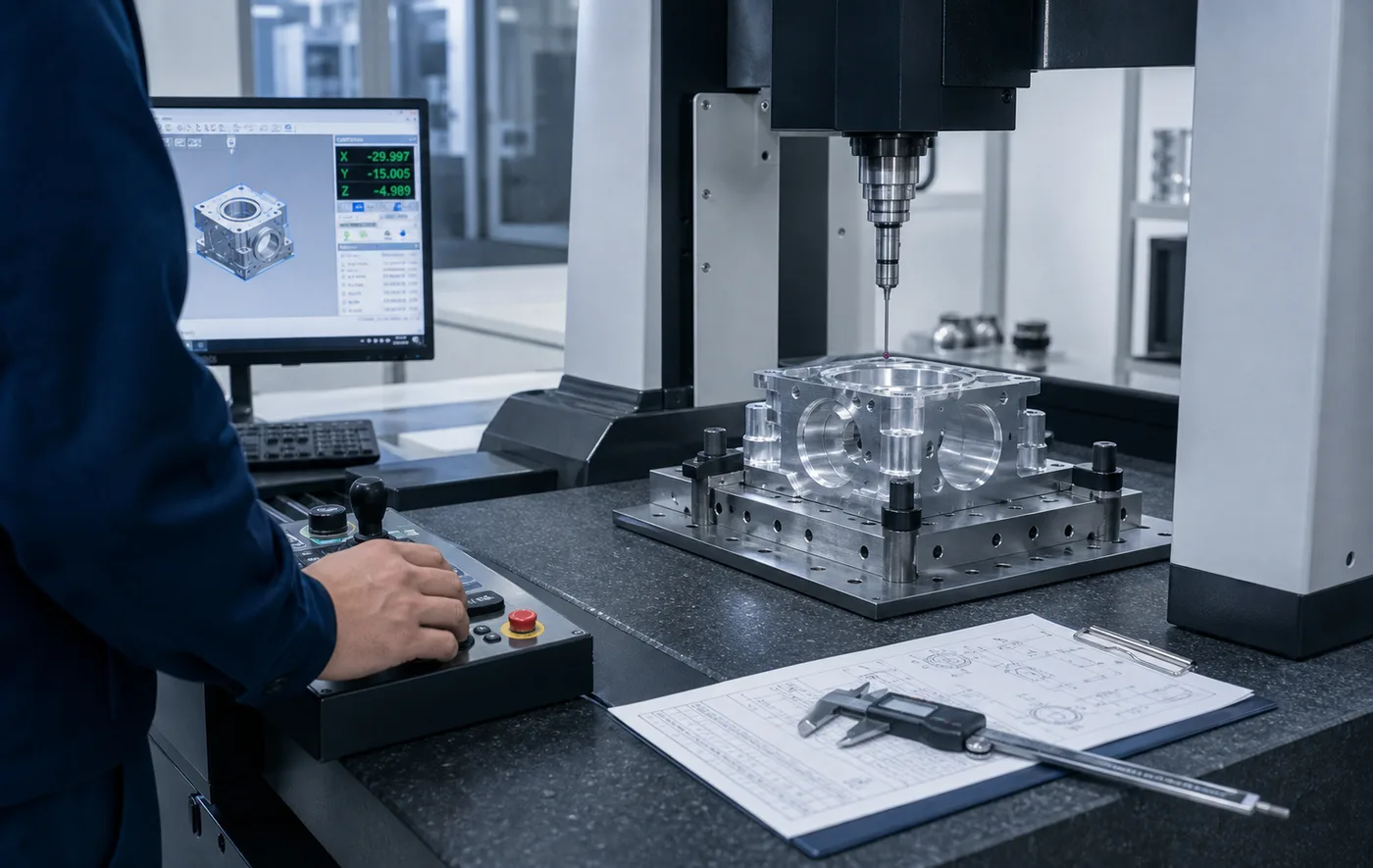
Drawing revision, material test report, heat or lot identity, blank source, heat-treatment and hardness records, part marking, authorized model range, and substitution control supplied to the purchase specification; Dimensional, surface-finish, hardness, case-depth, coating, weld, ultrasonic, magnetic-particle, dye-penetrant, or other inspection included only where the controlled drawing or approved quality plan requires it; Pin and bushing clearance, bearing and seal fits, bore alignment, shaft runout, concentricity, spline or key relationship, mounting position, flatness, perpendicularity, and thread or port geometry inspected from functional datums; Hydraulic and lubrication parts checked for cavity and port form, intersecting-hole burrs, plug installation, internal cleanliness, protected sealing faces, preservation, and pressure or leak test conditions defined by the buyer; Equipment guarding, brakes and steering, attachment retention, load and stability validation, ROPS or FOPS, lifting certification, operator visibility, controls, installed function, and return-to-service approval remain outside component dimensional inspection
Cost and lead time
Special steel, forging or casting minimums, blank mass, low-volume purchasing, machining allowance, material removal, interrupted cuts, heat treatment, straightening, stress relief, and risk of incomplete cleanup; Long shafts and deep bores, heavy workholding, multiple crane setups, restricted access, large machine and inspection envelope, datum transfers, and supplier capacity during a line-down schedule; Grinding, honing, spline or gear processing, hard turning, line boring, hardfacing, weld repair, coating, chrome alternatives, finish machining, and dimensions required after every secondary operation; Material and heat records, hardness mapping, NDE, CMM or portable metrology, surface finish, custom gauges, hydraulic flushing or testing, first-article reporting, witness points, and model-specific validation; Reverse engineering, one-off programming and fixtures, mating-part measurement, trial pieces, fleet compatibility control, expedited freight, rust prevention, protected journals, kit packing, and heavy export packaging
RFQ package
STEP model, controlled 2D drawing, assembly or exploded view, authorized equipment make, model, serial range and revision, part function, and marked critical or safety-related interfaces; Excavator, loader, backhoe, lifting, concrete, paver, roller, compactor, trenching, access, or support equipment; load, motion, speed, pressure, temperature, shock, grit, mud, water, salt, concrete dust, and service interval; Exact material and blank route, heat treatment, hardness or case depth, wear or corrosion system, welding, coating, NDE, cleanliness, pressure-test, material-document, and dimensional-inspection requirements; Prototype, replacement, fleet-spare, or production quantity; annual demand; worn-sample condition; mating-part data; validation owner; downtime target; delivery country; rust protection; and export packaging